

What to Wear in Lapland in Winter: Layers + a Packing List


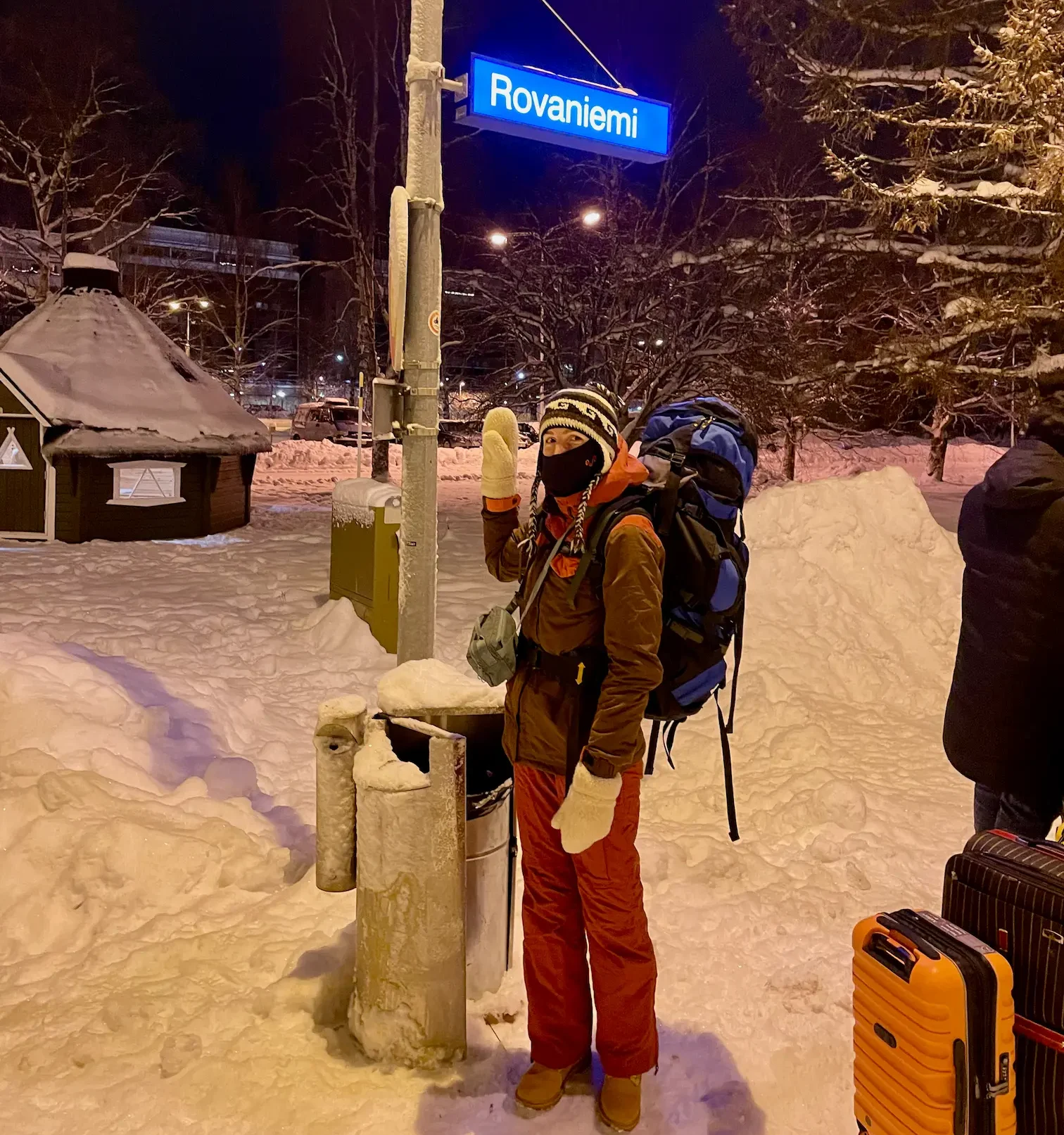
Planning a trip to Lapland in winter? Then you’re probably wondering what to wear in Lapland to stay warm in Arctic conditions. We’ve been there too, over three winters in Rovaniemi, the last two with our son.
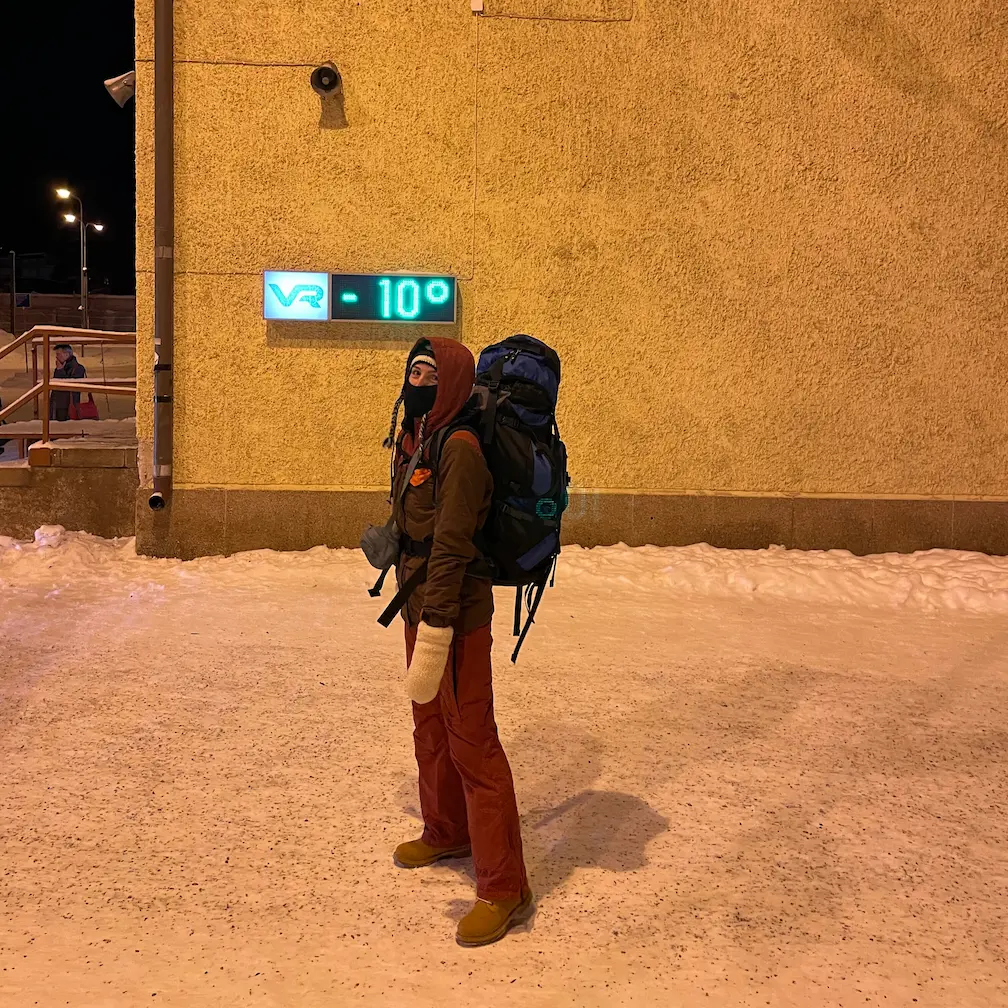
Winter there usually means anything from 0°C to -25°C (32°F to -13°F), and colder spells happen: on our last trip it dropped to -32°C (-26°F). Nearly everything you’ll want to do, from husky rides and snowmobiling to chasing the northern lights, happens outdoors, so staying warm and dry is the key to enjoying your trip.
The secret is layering: three or four layers, starting with thermal underwear, then a warm mid layer like wool or fleece, topped with an insulated, weatherproof outer shell. Below is how to dress for Lapland, layer by layer: what’s worth renting and what to bring yourself, how we dress our son, and our packing list.
👉 Our 5-day Lapland itinerary: the week you’ll be dressing for, with the three things we’d spend on again.
👉 Lapland with kids: a realistic 7-day itinerary: the family version, built around our trips with our son.

Want us to plan it for you?
We’ve done Rovaniemi twice with our son, and we can plan your week around your kids’ ages, your dates and your budget.
Plans from $189
What You'll Find In This Post:
Rental prices are for the 2026–27 winter, checked in October 2026.
Can You Rent Winter Clothes in Lapland?
Yes, and it’s surprisingly easy: you’ll find rental options almost everywhere. Most activity providers lend you an overall, boots and mittens for their tours, so it’s definitely worth checking what’s included before you book. It might save you a chunk of money. Some resorts, like Apukka Resort, lend winter clothing to their guests too.
We’ve never rented ourselves: with the layers below we were warm, and on a safari the operator lends you an overall for the ride anyway. But if you don’t own proper winter clothes, renting saves buying a whole wardrobe for one trip.
No winter gear? Rent it in Rovaniemi!
Winterent rents sets for adults (a winter jacket and trousers, snow boots, mittens and a tube scarf) and for children from 80 cm. An adult set was €88 for five days when we checked in October 2026, and booking through GetYourGuide gives you free cancellation and pay later.
We bring our own gear, so we haven’t used it, but for a one-off trip it makes more sense than buying, and it’s the one we’d book.
A typical rental set is an insulated overall (or a jacket and trousers), snow boots and mittens. For kids or anyone without proper winter gear, that’s an affordable and stress-free solution, since good-quality outerwear gets pricey fast.
The one thing you should buy for your trip is a proper base layer. Rental shops don’t rent out thermal underwear, wool socks or hats, and the base layer is arguably the most important part of staying warm in Arctic temperatures.
If you already own most of what’s on our packing list, there’s no need to pre-book anything. Wait until you arrive, check the forecast and see how you feel: if it’s colder than expected, you can still rent on the spot.
👉 Lapland on a budget: what our trips really cost, and where else to save.
Full Layering Guide
Here’s how we layer, from the skin out.
Base Layer
Start with a long-sleeved thermal top and a pair of thermal leggings, worn directly against the skin. You’ve got two main fabric options here: synthetic or wool.
Synthetic thermals are usually cheaper, but they’re less breathable and can leave you sweaty, which is not what you want when it’s this cold outside. Wool is a bit pricier, but it regulates temperature better and, we think, feels much nicer on the skin.
Merino wool is your best bet: it’s so soft you won’t feel like you’re wearing wool, it packs small, and it keeps you warm. Our favourite is Dilling, a Danish merino maker whose range goes from babies to adults. You can also pack thermal underpants, but to be perfectly honest, we managed fine without them.
First Mid-Layer
This is where you add warmth: a hoodie or a wool sweater, something breathable and cosy, worn directly over your base layer. For your legs, go for insulated, windproof pants. If you ski, your ski pants work great here.
Second Mid-Layer
This layer is optional, but worth it when the temperature drops below -10°C (14°F). A softshell or fleece jacket works well on top. For your legs, you could wear sweatpants under your ski pants, but unless it’s really cold, that might be overkill.
We skipped the second mid-layer on warmer days, between -10°C and 0°C (14°F and 32°F), and were still comfortable. It really comes down to how easily you feel the cold. A good rule of thumb: bring a little extra, because you can always take a layer off if you get too warm.
Outer Layer
Your final layer is all about protection. Choose an insulated hardshell or a 3-in-1 jacket that’s both windproof and waterproof, and finish with a warm hat and waterproof gloves or mittens.

Footwear
When it comes to keeping your feet warm, wool is your best friend. You can find synthetic thermal socks, but in our experience they feel uncomfortable and make your feet sweat, and sweaty feet quickly turn into cold feet.
Merino wool stands out for a reason: it’s warm yet breathable, wicks moisture away and adapts to the conditions, so your feet stay dry and warm without overheating. If ordinary wool feels too scratchy, try a blend: our favourite socks mix merino, alpaca and sheep wool, and they’re ultra-soft. Or wear a thin merino sock underneath and pull thicker wool socks over it.
Whatever you pick, make sure it’s real wool, not a cheap acrylic-wool blend. Acrylic might look the part, but it traps moisture and leads to sweaty feet.
Insole foot warmers are another option, but never put them against bare feet. They work best over thin cotton socks: wool is such a good insulator that you barely feel their warmth through it. Honestly, a good pair of wool socks, or two, does more than insole warmers.
You’ll also want sturdy, waterproof boots with thick soles, which insulate your feet from the frozen ground. Wool socks are bulky, and you may want to double up, so choose boots with enough room: tight boots are the fastest route to cold feet.
Dressing Babies and Toddlers for Lapland
We’ve been to Lapland twice with our son, the first time at 10 months, and the same layering works for little ones: merino against the skin, a wool or fleece mid layer and a proper snowsuit on top. Dilling makes merino in baby sizes, and for the snowsuit we’d pick Reima, a Finnish brand made for Nordic winters. Pre-loved Reima is a good way to save.
The big difference: a baby in a stroller, sledge or carrier isn’t moving, so they get cold faster than you do while you walk. We gave our son an extra layer, like the foot muff in his stroller, where he napped outside at -15°C (5°F). To check he was warm enough, we felt the back of his neck: it should feel warm, not cold or sweaty.

A merino balaclava stays put better than a hat because small hands can’t pull it off, and pack spare mittens and socks: they will get wet. If you’d rather rent, Winterent’s kids’ sets start at 80 cm, so a baby smaller than that needs their own snowsuit.
👉 Packing for a baby or toddler in Lapland: our full list, layer by layer, with a printable version.
A Few More Things to Consider
Three things that are easy to get wrong:
Is Good Thermal Underwear Worth It?
Absolutely: thermal underwear is one of the best investments you can make for a Lapland trip. As we said above, skip cotton and acrylic and go for wool, ideally merino. It keeps you warm in the cold, wicks sweat away to keep you dry, and keeps you comfortable indoors without overheating. Acrylic, on the other hand, traps moisture and makes you sweat.
And it isn’t just for Lapland. Our thermals have changed how we do winter everywhere, whether we’re wandering around Christmas markets, spending a day on the slopes or just braving a chilly city walk. Good thermals cost a bit upfront, but they’re durable, low-maintenance and long-lasting, and worth every cent.
Do You Need a Balaclava?
If you’ve never worn one, picture what Formula 1 drivers or bikers wear under their helmets: a snug piece that covers your head and neck, leaving just your face (or eyes) free.
You won’t need one for strolls and sightseeing, but we’d bring one for anything fast, like a husky ride or snowmobiling. The wind chill at speed really stings on your face, and a balaclava shields it and makes the cold much more manageable.
As with most gear, you can choose synthetic or wool. Wool is warmer and more breathable, but a synthetic one will do the trick if you’re watching your budget. It’s not as essential as your base layer, but for high-speed activities it’s well worth having.
Should You Wear a Scarf?
A wool scarf might seem the obvious choice, but honestly, we found it a bit impractical: most scarves are bulky and make it harder to zip your jacket properly. A neck warmer or a balaclava is more compact, sits snugly against your skin and keeps you warmer by sealing in the heat.
A scarf on top of your outerwear won’t hurt as an extra layer, as long as it’s wool or a wool blend. A purely synthetic one probably won’t keep you warm, and it just takes up space in your luggage.
What to Pack for Lapland
Here’s everything you’ll need for a winter holiday in Lapland: a minimal but practical packing list that keeps you warm, dry and comfortable in Arctic conditions.
We always pack light, and merino makes that easy, because it rarely needs washing. Hang it outside in the fresh air overnight, and it feels like new.
Upper Body
- Thermal long-sleeved tops: your base layer, and your best friend in Lapland.
- Wool sweaters: breathable and warm, perfect for layering.
- A fleece jacket: extra insulation for colder days.
- An insulated hardshell or a 3-in-1 jacket: your outer layer against wind, snow and icy temperatures.
Lower Body
- Thermal leggings: one pair is enough, but bring a second if you want a backup.
- Sweatpants or thin thermal pants: your mid layer for very cold days.
- Waterproof snow pants: ski pants are perfect here.
Accessories
- A wool balaclava: keeps your face and neck warm when it’s freezing.
- Warm gloves or mittens: bring a spare pair in case one gets wet.
- A hat that covers your ears, plus a scarf if your jacket doesn’t cover your neck well.
- Wool socks: at least a couple of pairs, ideally merino.
Extras
- An insulated bottle: our Chilly’s bottle kept our tea hot for over six hours below freezing, and a warm drink makes a big difference.
- Insole foot warmers: handy if you get cold feet easily or plan to stand still for a while, say, waiting for the northern lights. Wear them over thin socks, never on bare feet.
Just One More Thing: Your Swimsuit
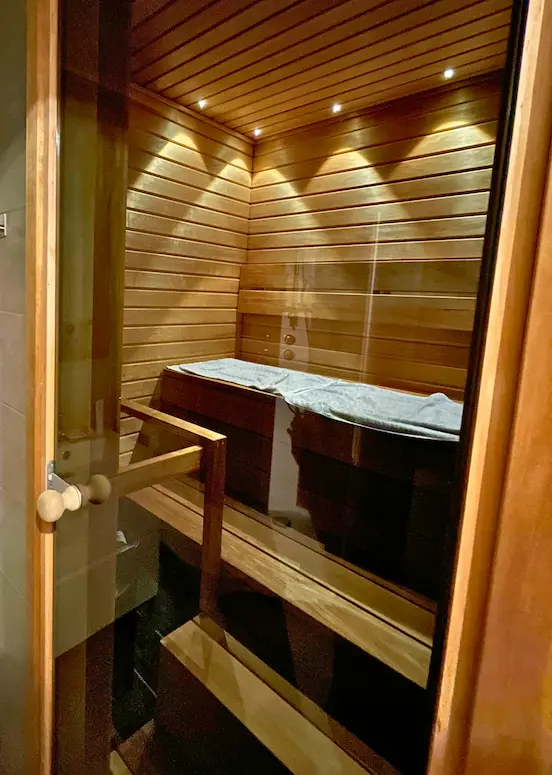
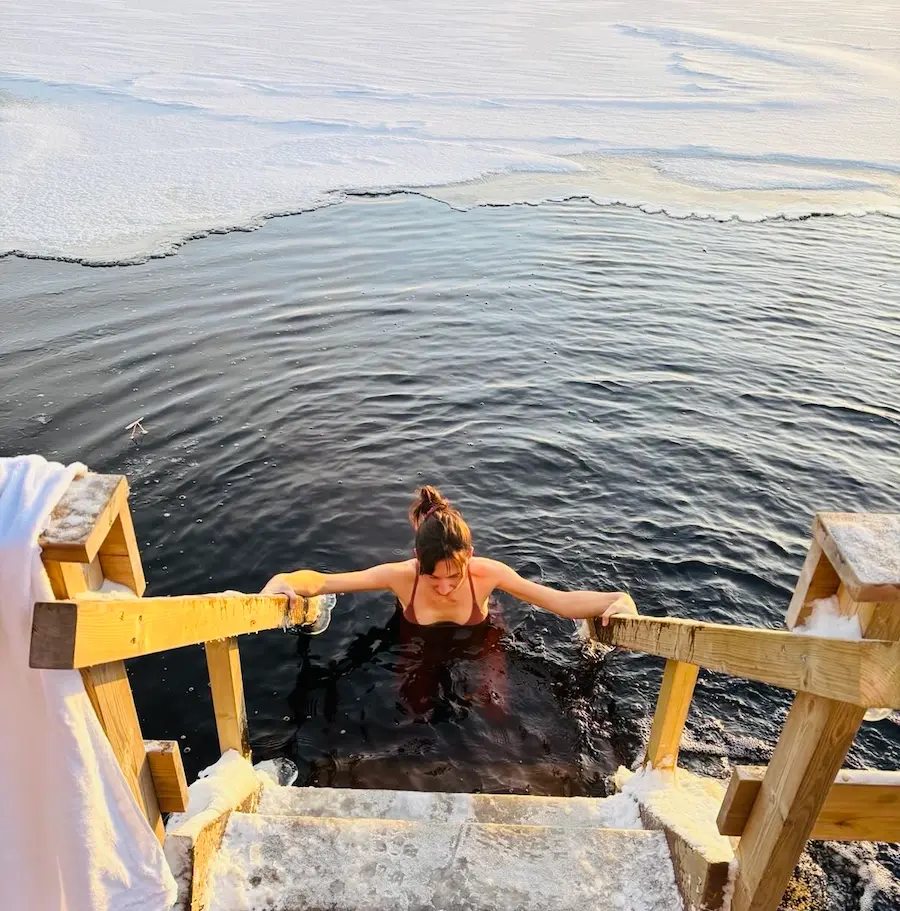
Don’t forget your swimsuit for the sauna! Even if you’re not planning a dip in an icy lake (though you should!), a sauna is a must in Lapland.
Our packing lists for adults and kids, plus money-saving tips and Finland basics, as one free download 👇
How to Stay Warm in Lapland
Even with all the right layers, staying warm takes a little strategy, especially on long days outdoors. Here’s what works for us:
Keep Moving
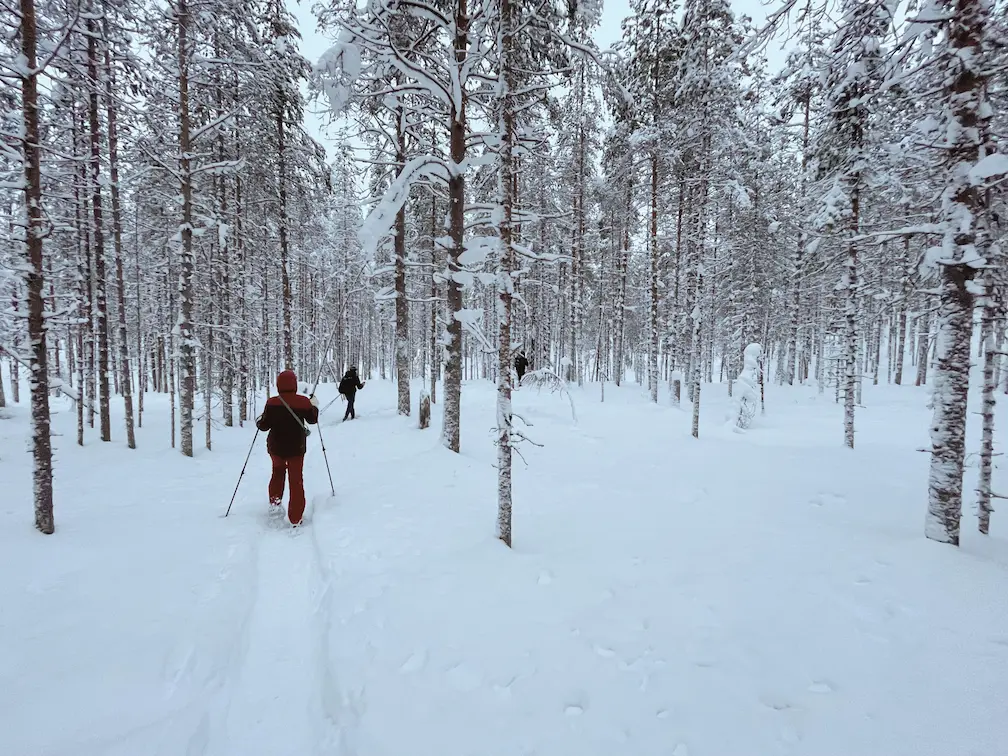
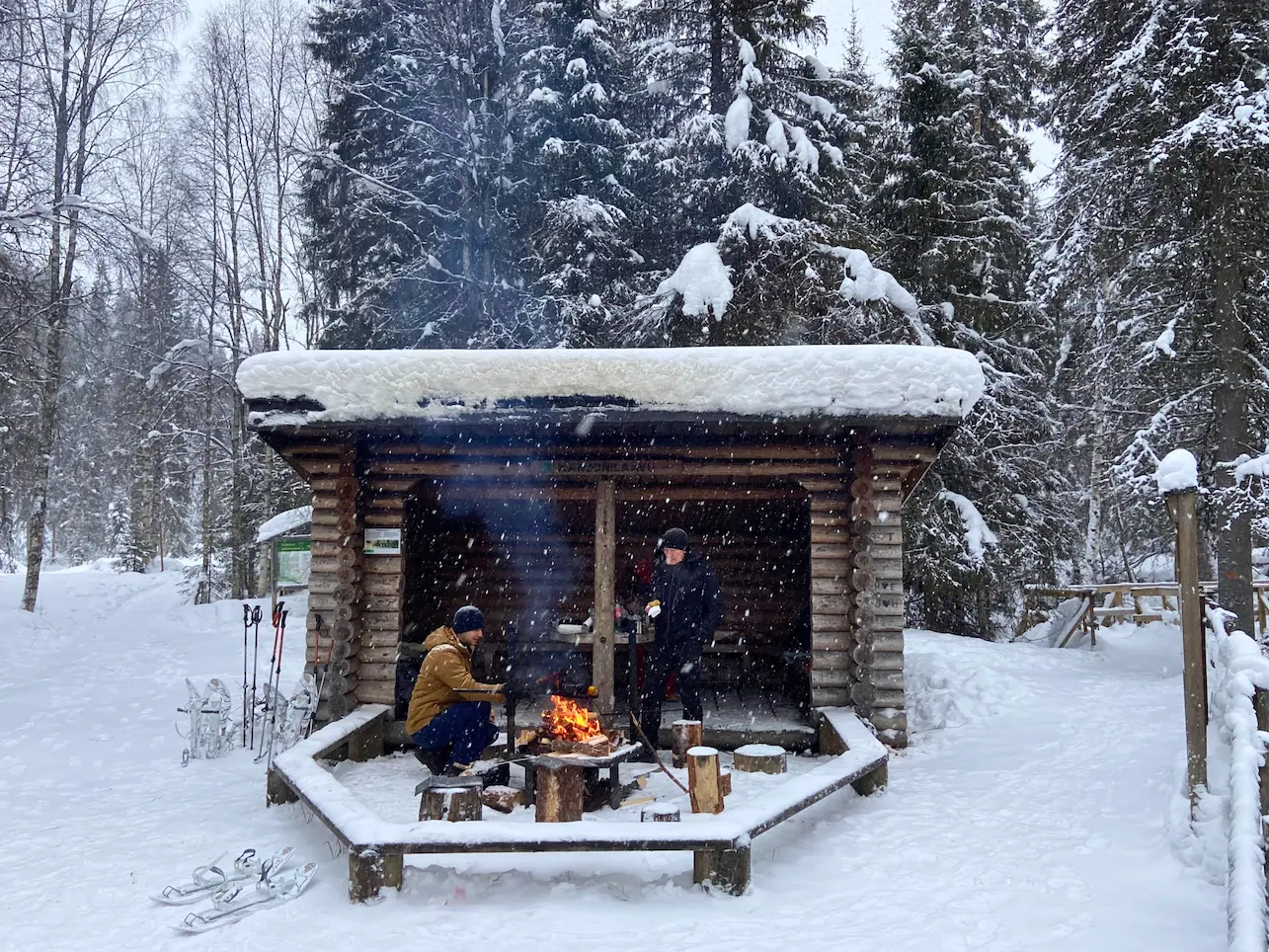
It might sound obvious, but movement is your best heat source. Walking, snowshoeing or just bouncing on your toes while you wait for the northern lights, staying active helps your body make heat. Stand still too long, even in the best gear, and you’ll feel the chill quickly.
Stay Hydrated
It’s easy to forget to drink when it’s cold, but dehydration makes it harder for your body to regulate its temperature. Keep sipping water through the day; warm herbal tea works too.
Eat High-Calorie Food
Your body burns more energy in the cold, so don’t be shy about fuelling up. Hearty meals and high-calorie snacks, like nuts, chocolate or cheese, keep you going, and we always have trail mix or granola bars in our pockets on longer outings.
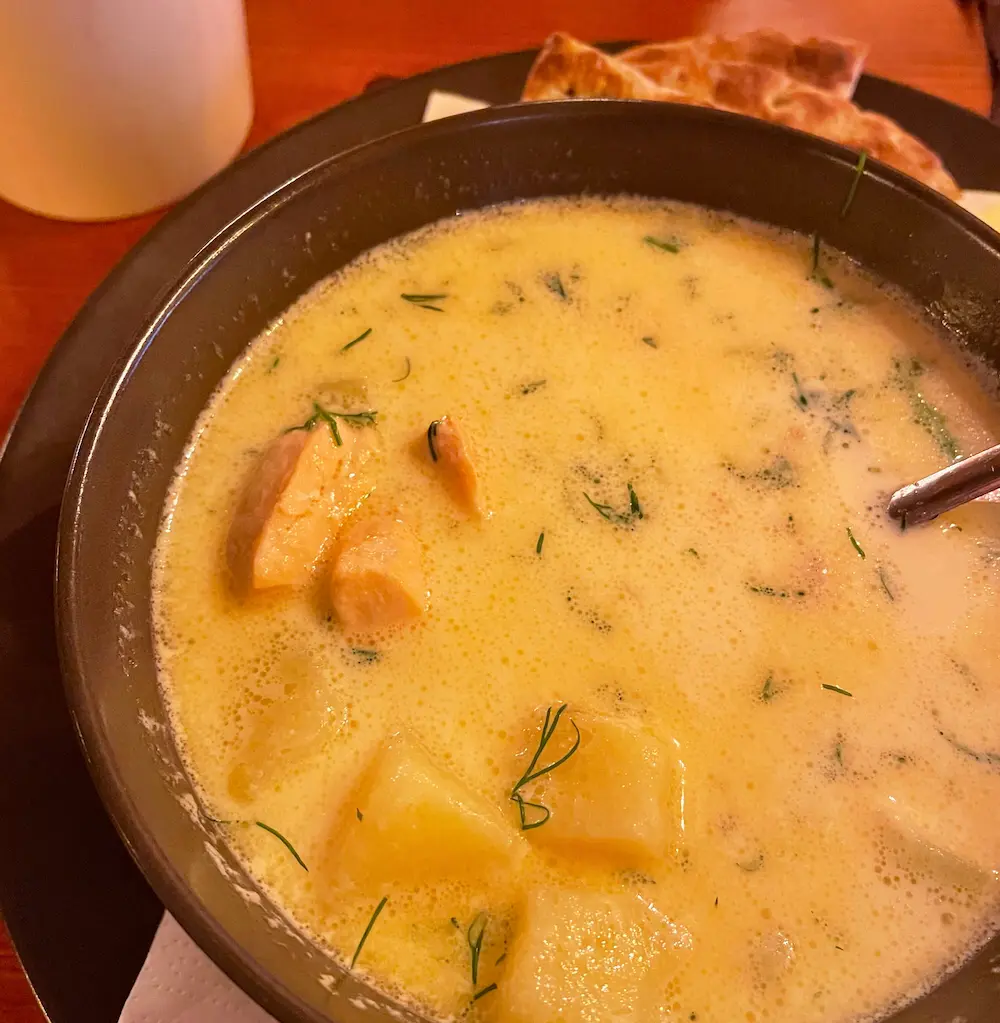
Back indoors, a creamy salmon soup (lohikeitto) is both comforting and delicious, and it’s our favourite thing to eat in Lapland after a full day in the snow. More in our guide to Lappish food.
Stay Dry
Moisture is the enemy of warmth, whether it’s snow melting into your gloves or sweat from one layer too many. Choose moisture-wicking base layers and waterproof outerwear, and bring spare socks and gloves just in case.

Protect Your Extremities
Your head, hands and feet are the first to get cold, so take extra care of them:
- Wear a warm, windproof hat that covers your ears.
- Get good mittens or gloves: mittens are generally warmer.
- Wear wool socks and waterproof boots to keep your feet warm and dry.
If you really struggle with the cold, disposable hand and foot warmers help, especially when you’re standing around for a long time.
Final Thoughts: How to Dress for Lapland Without Overpacking
We hope this guide makes it easier to decide what to wear in Lapland, especially if you’re not used to Arctic winters. There’s no one-size-fits-all approach, but the core of it is simple: merino against the skin, a warm mid layer, a windproof and waterproof shell, and wool on your feet. Rent the outer layers if you don’t own them, and buy the base layer.
Enjoy every moment in the snow, and most importantly, travel safe and stay warm!
👉 Read next:
- 5-Day Lapland Itinerary: What We’d Do Again in Rovaniemi: the week you’ll be dressing for, day by day.
- Lapland with Kids: A Realistic 7-Day Itinerary: our week with our son, day by day.
- 9 Winter Activities in Lapland: Which Are Worth It?: what you’ll be doing outdoors, and which activities are worth the money.
FAQ: What to Wear in Lapland in Winter
How cold does it get in Lapland?
Usually anywhere from 0°C to -25°C (32°F to -13°F) in winter, and colder spells happen: on our last trip it dropped to -32°C (-26°F). Dress in layers, so you can adjust through the day.
Do I really need a thermal base layer?
Yes. A good base layer is one of the most important parts of your winter outfit: it keeps you warm and wicks moisture away. Merino wool is ideal for both warmth and comfort.
Can I rent winter clothes in Lapland?
Yes. Most activity providers lend overalls, boots and mittens for their tours, and rental shops like Winterent rent whole sets. Base layers aren’t included, so bring those yourself.
How do I dress a baby or toddler for Lapland?
The same way as yourself: merino against the skin, a wool or fleece mid layer and a proper snowsuit, plus an extra layer while they’re sitting still, like a foot muff in the stroller. Feel the back of their neck to check they’re warm. More in dressing babies and toddlers.
Will I be warm enough during outdoor activities?
Yes, as long as you layer properly, keep moving and protect your head, hands and feet. Bring hand or foot warmers if you’re worried, and add or remove layers as you go.
What’s one thing I shouldn’t forget?
Your swimsuit! For the sauna, or a dip in an icy lake if you’re feeling brave. It’s the Lapland essential most people don’t think of.
Can I wear jeans in Lapland?
Not recommended. Denim is mostly cotton, which holds moisture and cools you down rather than keeping you warm. It isn’t windproof either, and the weave soaks up snow that then freezes.
Jeans can work if you wear thermal leggings underneath, the weather is fairly mild and dry, and you won’t be outside for long. If you’ll be outdoors a lot (and you probably will), leave the jeans at home and wear insulated, windproof pants instead.


One Comment
Comments are closed.