
Lapland with a Toddler? Here’s How to Make It Work

Many people assume that Lapland, with its snow-covered wilderness and sub-zero temperatures, is best reserved for the adventurous or those travelling child-free. But can you visit Lapland with a toddler or a baby? Yes, and seeing it through the eyes of a child makes it even better.
We’ve been to Lapland three times: once before having kids, and twice with our son, the first time when he was 10 months old. The experience is quite different with a child, but not in a bad way. You naturally slow down, become more present and see the Arctic with fresh eyes.
Gone is the pressure to tick off a dozen activities a day. Instead, you focus on one highlight and leave space for spontaneous fun: snowball fights, sleigh rides, or simply taking in the snowy landscapes.
This guide covers the practical side: how to get there, what to pack, where to stay and what to do when it’s too cold to go out. For how it all fits into a week, see our 7-day Lapland itinerary with kids.

Want us to plan it for you?
We’ve done Rovaniemi twice with our son, and we can plan your week around your kids’ ages, your dates and your budget
Plans from $189
What You'll Find In This Post:
Is Lapland Kid-Friendly?
Absolutely. Lapland is one of the most family-friendly places we’ve travelled to. Nordic culture places a strong emphasis on children’s well-being; locals are very welcoming, and it’s not uncommon to get warm smiles even when your toddler is having a meltdown.
Whether it’s accessible transport, baby-friendly accommodation, or activities designed for little ones, it’s all there, and you’ll never feel like you’re inconveniencing anyone by travelling with young children. Kids also get generous discounts almost everywhere, and little ones often eat free at buffets. So yes, you can definitely go to Lapland with a toddler.
👉 Rovaniemi with children: 9 things kids love, from Santa to huskies, with prices and age limits
Is Lapland too cold for kids?
A valid concern, but the short answer is not at all, as long as they’re dressed right.
While winter temperatures can drop below -20°C (-4°F), most of the time it stays between 0°C (32°F) and -15°C (5°F). On our first two trips it never got colder than -15°C (5°F), and we sometimes even felt too warm while hiking! On our last trip it dropped to -32°C (-26°F), and on those days we stayed indoors at Pilke and Arktikum instead.

The key is proper winter gear: high-quality thermal base layers (we recommend merino wool), insulated outerwear, waterproof boots, gloves, and hats. Kids who move around a lot actually stay quite warm, and once they’re bundled up and playing in the snow, they rarely complain about the cold.
And let’s not forget that Lapland is home to thousands of local families. Babies are born here, toddlers play outside daily, and kids go to school in the Arctic winter. So no, Lapland is absolutely not too cold for kids; you just need to be well prepared.
How to Get to Lapland with a Toddler (or a Baby)?
1. By Plane
The quickest and most convenient way to reach Lapland with a toddler is by air. Airports in Rovaniemi, Kittilä, and Ivalo offer connections from Helsinki as well as many major European cities. With Lapland’s growing popularity, there’s an increasing number of direct seasonal flights from across Europe—especially during the winter months.
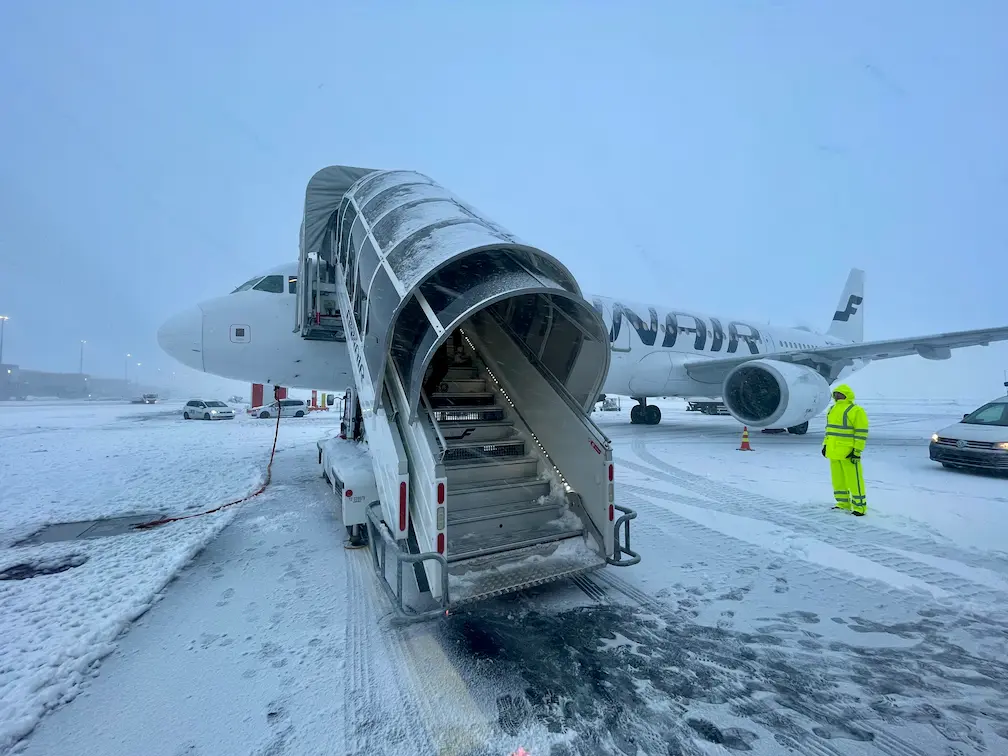
We highly recommend flying with Finnair. In our experience, they combine excellent service with impressive expertise in handling extreme weather—something especially important when flying into or out of Helsinki. They’re also very child-friendly: we paid just around €20 for our child under 2, and he was allowed both a full-size suitcase and a stroller. Of all the airlines we’ve used with a toddler, Finnair has been the best by far.
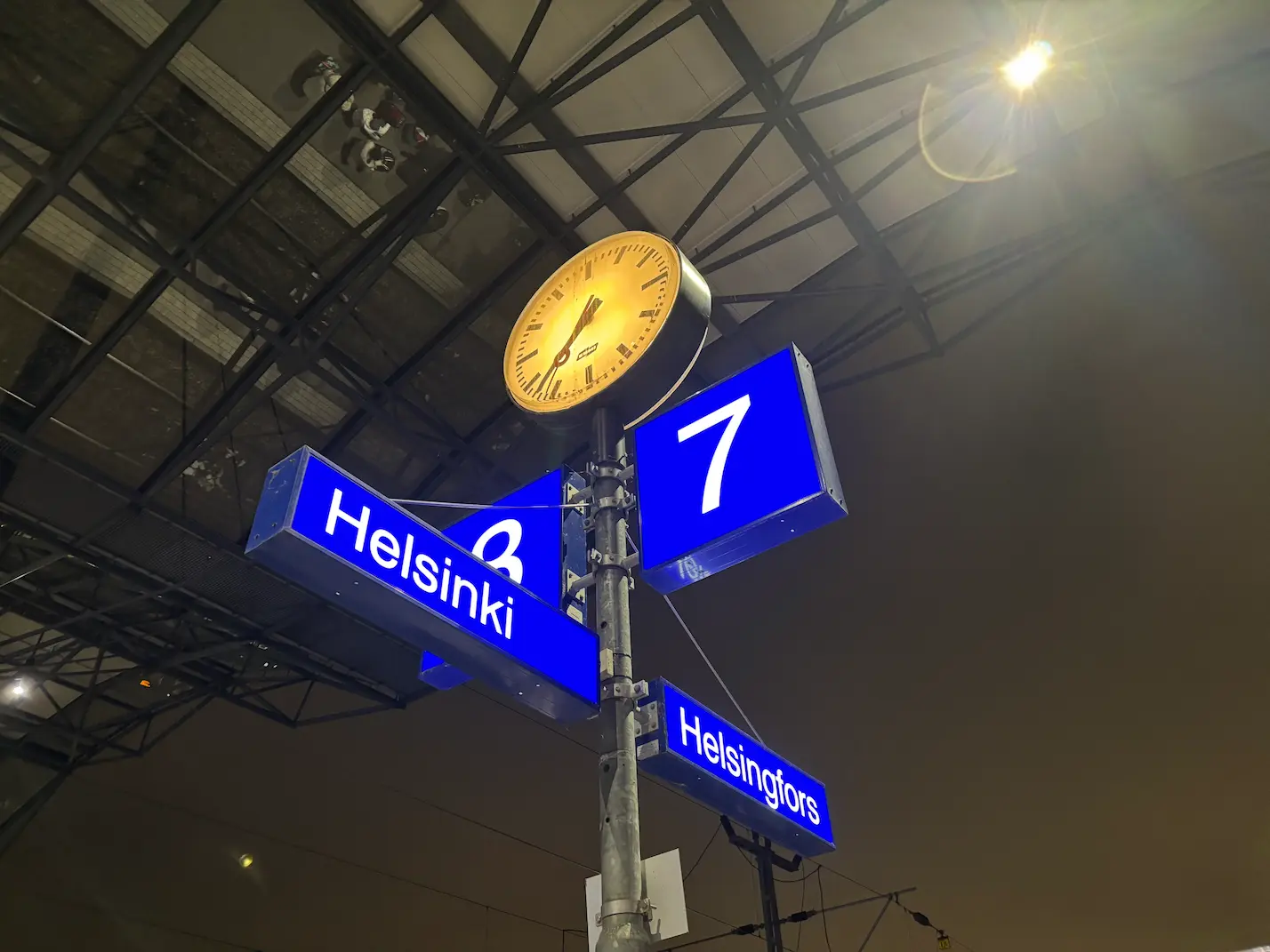
2. By Train from Helsinki
Connecting flights via Helsinki can get expensive during high season. A budget-friendly—and surprisingly kid-friendly—alternative is the overnight train to Rovaniemi. Children under 11 travel for free on night trains, when they share a berth with an adult, and the sleeper train itself is an adventure. For more info, check the official site of the Finnish Railway Services (VR). Our toddler was completely captivated by everything: the speaker announcements, the big windows, and the bunk beds.
That said, be aware that the cabins are compact. Traveling with large suitcases or a stroller can make the space feel tight, though it’s still manageable. And if you’re sharing a bed with your little one, you might not get the most restful sleep. Still, it felt more like a memorable experience than a hassle—and we’d absolutely do it again.
👉 Getting from Helsinki to Rovaniemi: four ways to get there, compared
How We Made It Work with a Toddler: Tips from Our Trips
Here’s what made it work on our two trips with our son: what eating out costs, where to shop, getting around, and what to do when it’s too cold to go out.
Book somewhere with a kitchen. Eating out in Lapland is expensive. A hotel covers breakfast, but that still leaves two meals a day out, and dinner cost us about €30–40 each for a main, a drink and sometimes dessert. Over five nights that’s €300–400 for two adults before anything for the children. Supermarket prices, on the other hand, are close to what you’d pay in the UK or Germany. We stocked up on wintery granola with blueberries or cinnamon (kids tend to like it anyway), bread and spreads, and had a cheap dinner at home at least some of the days.
A kitchen changes your evenings too. Unless you’re eating at the hotel restaurant, there’s no getting everyone back into snowsuits after dinner, and if your little one needs to go to bed first, you eat afterwards. It’s why we booked a cottage with a kitchen both times. Our family section on where to stay in Rovaniemi has the options and what they cost a family.

Shop at K-Market or Prisma. We shopped at two K-Markets, one close to the train station and a better one inside the Sampokeskus shopping centre. Our host also sent us to Prisma, a giant hypermarket on the edge of town, about five minutes’ drive from our cottage. We’ve never been to the US, but that’s how we imagine a Walmart or Costco: everything from clothes to electronics to food. You’ll definitely need a car for this one.
Rent a car. We had a rental car on both trips with our son, and with small children we’d always have one. Rovaniemi is very walkable, but in full layers on compressed snow, even a ten-minute walk feels long when it’s really cold. Buses run, but not often. A car gets you to Prisma, the forest trails, and everything just outside town. Most cottages come with parking, and we didn’t need an engine heater, even at -32°C.
👉 Do you need a car in Lapland? When renting one pays off.
Rental car: we compare prices for Rovaniemi on DiscoverCars.
Make sure snow gear can dry. With a child in the snow every day, snowsuits, mittens and boots need to dry overnight. Our cottage had no drying cabinet, but the wet room did the job. If a listing mentions a drying cabinet, even better.
Do You Need a Stroller in Lapland?
A stroller isn’t an absolute must; it really depends on your child and your travel style. We brought our Emmaljunga (a sturdy Swedish brand built for snowy conditions), and we were very happy with the decision. All-terrain strollers like it handle snow and rough paths well, though they’re bulkier than lightweight travel models. Streets and pavements are well maintained, so a smaller stroller manages too; bigger wheels just make it easier.
That said, if your child doesn’t nap outdoors, or you’re staying somewhere remote where you’ll mostly be indoors, you may be fine without one.
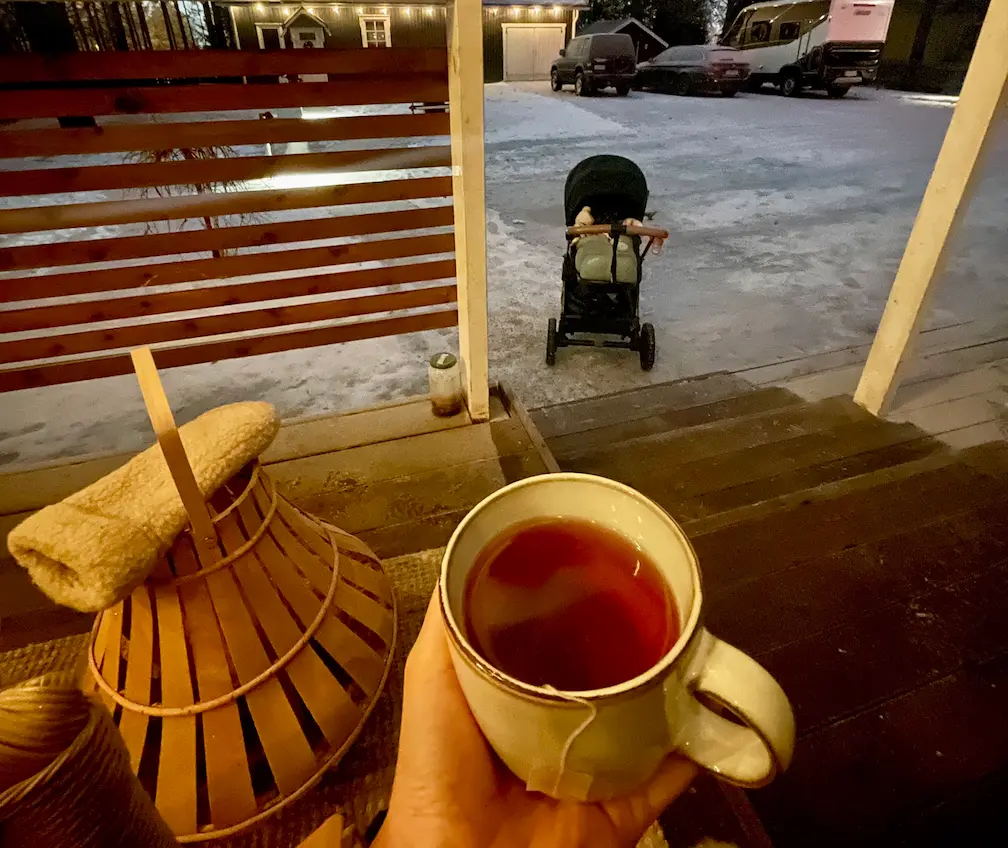
Why bring a stroller? In Lapland, it’s quite common for babies and toddlers to nap outside, even in winter, and ours napped in his stroller at -15°C. A good stroller lets your child sleep peacefully in the fresh air, which many parents say leads to deeper and longer naps. With proper winter gear and a foot muff, it’s totally safe and actually recommended in Nordic cultures.
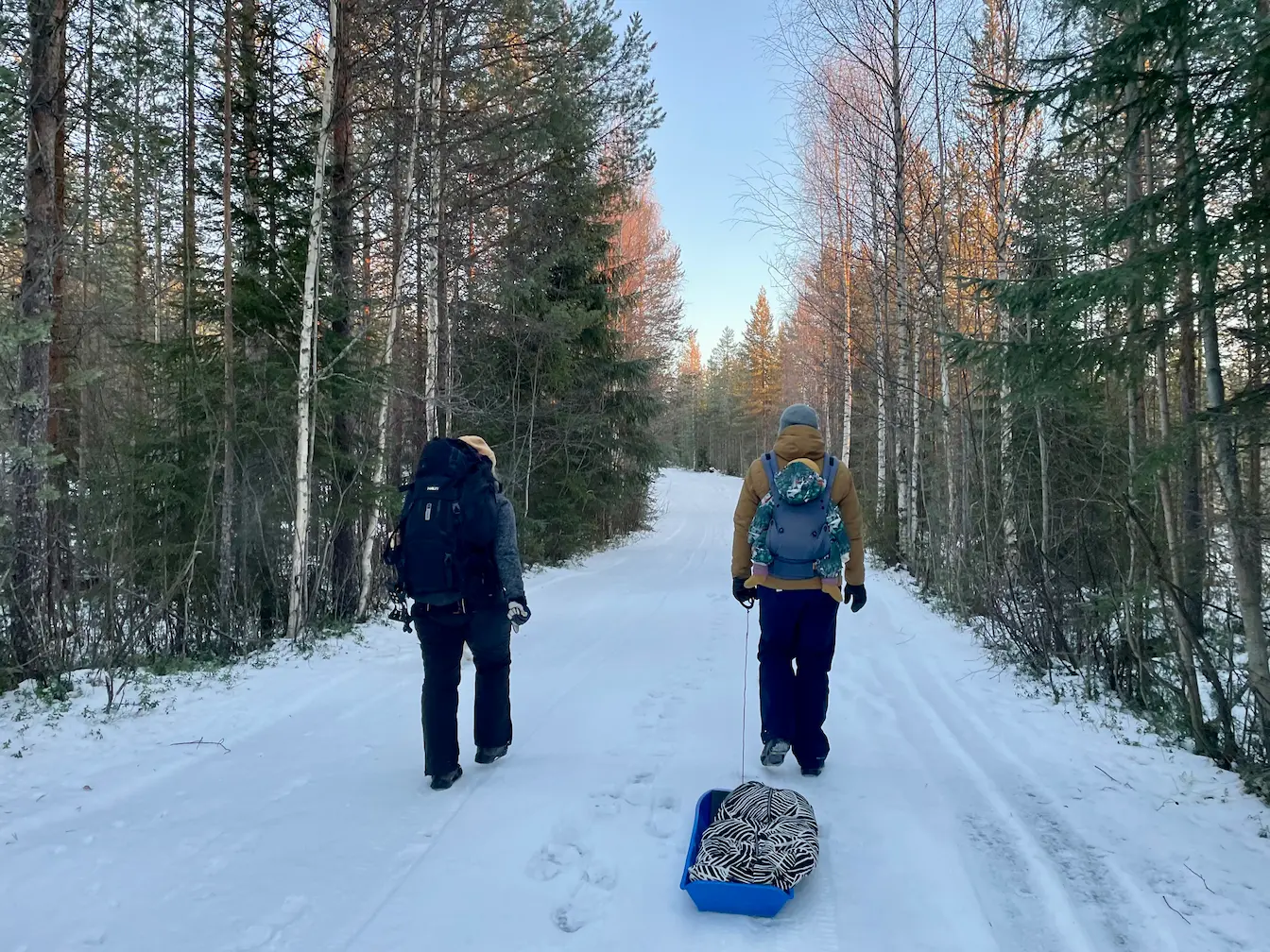
No stroller? No problem! Many accommodations and holiday resorts offer sledges for little ones (our host had them), and you’ll see plenty of local parents pulling their kids around town this way. It’s both fun and practical.
When It’s Too Cold to Go Out
On our last trip, in early January, it dropped to -32°C (-26°F). Our host told us that even her family stays in when it’s that cold, and that it happens about twice a season. We still had a great trip; we just spent more of it indoors.
Pilke Science Centre shouldn’t be skipped with a child, whatever their age, and you can easily spend a few hours there. Arktikum, right next door, is similar, though it isn’t built as a playground the way Pilke is. It’s still great for a few hours exploring Arctic life and the history of Rovaniemi, and we had lunch at its café in between.
👉 Pilke and Arktikum with kids: opening hours, ticket prices and what’s changed at the café
We also went to Coffee House in the city centre (try their pullas, the Finnish sweet buns; they’re awesome) and the Sampokeskus shopping centre.
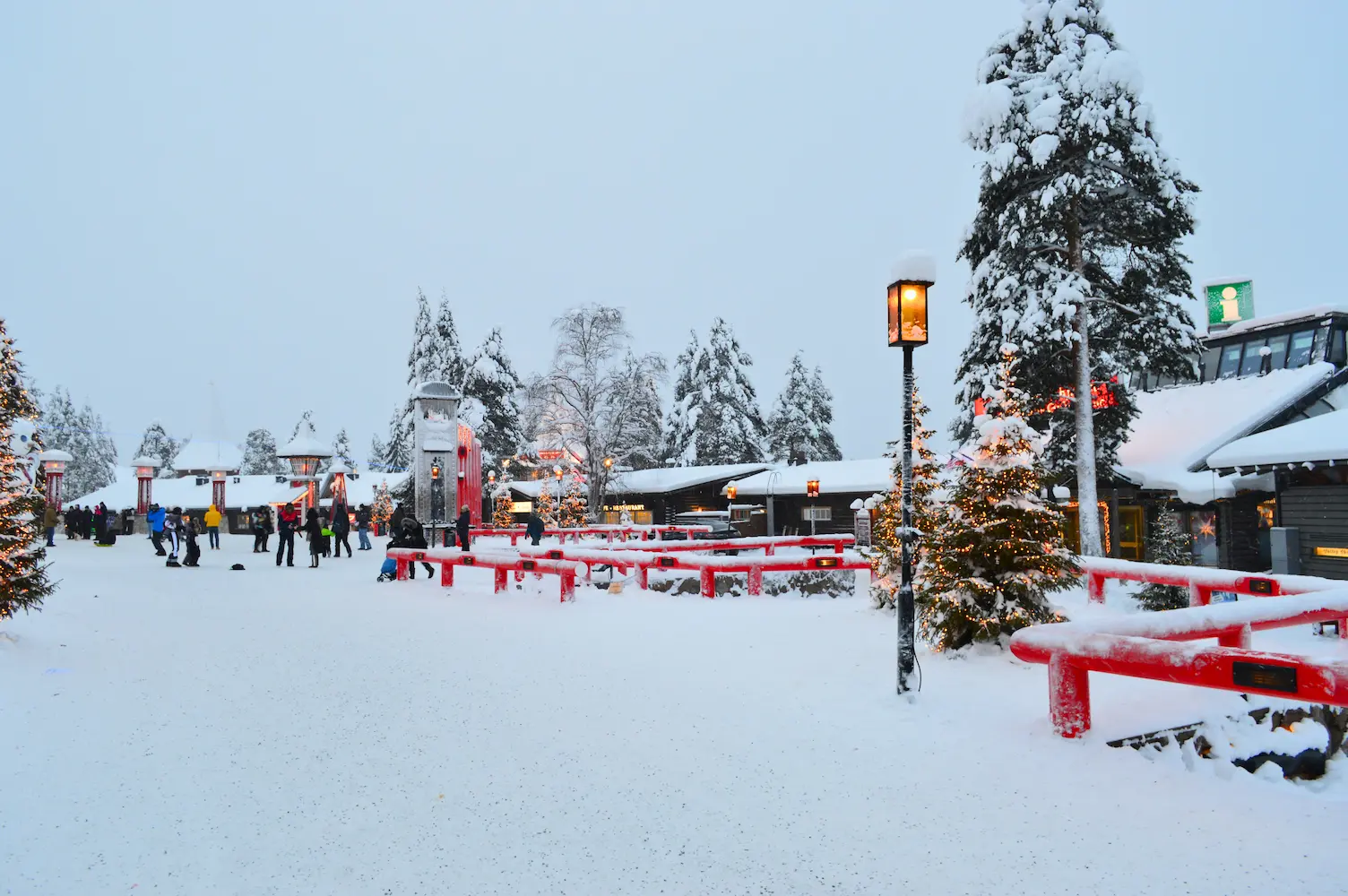
In early January you only get five or six hours of usable light anyway, so those are enough to fill a couple of days, and hopefully by then the cold snap has passed. If it hasn’t, there’s SantaPark, the underground Christmas park near Santa Claus Village, which we looked at but didn’t get to. It’s only open until mid-January. Or there’s Santa Claus Village itself, where you’re in and out of buildings all the time.
Planning Lapland with little ones?
We can do the legwork.
We’ll check prices and availability for your dates and put the plan together: where to stay, what to book and what to skip, from parents who’ve done Lapland with a baby and at -32°C!
Plans from $189
Where to Stay in Lapland with a Toddler (or a Baby)?
👉 Where we’d actually stay with a toddler, and what a family pays per night in January: Where to stay in Rovaniemi with kids.
With a toddler, the real choice is between a cottage or apartment in town and a resort out in the forest. In town, supermarkets, pharmacies, restaurants and indoor attractions like Pilke and Arktikum are close by. That’s what we chose both times with our son: a cottage with a kitchen and a sauna.
You’ll need to drive or take a transfer to reach the forest trails, and Do you need a car in Lapland? helps you decide which.
Rental car: we always compare prices on DiscoverCars.
A resort outside town gives you snowy forest at the door and restaurants and activities on site, but some are quite remote, with no supermarket or pharmacy nearby, and dinner is wherever you’re staying, priced accordingly.

What to Pack for a Week in Lapland with a Toddler (or a Baby)?
You don’t need to bring your kids’ entire wardrobe. A few high-quality layers work far better than bulky clothes, and with merino, one well-layered outfit can be worn several times. Focus on warmth, comfort and waterproofing. Here’s what we’d bring, with a focus on kids but useful for the whole family, and there’s a printable version at the end of this section.
Base layers (2–3 sets)
Start with merino wool base layers. These are warm, breathable, moisture-wicking, and naturally odor-resistant. Unlike synthetic thermal wear, merino doesn’t trap sweat and rarely needs washing. Simply hang them outside overnight — the cold, dry air freshens them up perfectly.
⭐ Our favourite merino brand is Dilling. They’re a Danish merino maker that sells directly to customers, which keeps prices down without cutting corners on quality. Their range goes from babies to adults, so you can kit out the whole family in one place.
👉 Tip: Avoid polyester or synthetic-blend base layers for children, as they can cause overheating and sweating, which leads to chills.
- Merino wool long-sleeved tops
- Merino wool leggings
- Long merino socks
Mid layers (3–4 sets)
On top of your base layers, you’ll need an insulating mid-layer. Think thick wool sweaters or fleece jackets, plus lined pants made from breathable materials like wool or fleece.
- Wool/fleece sweaters or hoodies
- Insulated pants or fleece-lined joggers
Outerwear (waterproof & windproof)
The outer layer is your child’s first line of defence against snow, wind and wet weather, so it needs to be reliable. We highly recommend Reima, a trusted Finnish brand that specialises in winter gear for children. Their snowsuits and outerwear are designed for Nordic winters: functional, durable and warm, with insulation rated for temperatures as low as -20 °C (-4 °F).
They’re on the pricier side, but the quality and longevity make them worth the money. Reima designs its clothing with room to grow, so it lasts a whole season or longer, and it can be passed down to younger siblings or resold second-hand. You can often find pre-loved Reima in excellent condition, which is a good way to save money.
- Waterproof snowsuit/overall (or waterproof winter jacket + insulated snow pants)
- Waterproof and insulated winter boots
Do you need one of those thermal overalls? Not really. We’ve never rented one and managed just fine. They scream tourist, they’re ridiculously oversized and, honestly, they’re not a good look. With the right layers you won’t miss one: we wore merino leggings with ski pants over them, a merino base layer, a wool sweater, a fleece and a winter coat, and we were warm. A proper kids’ snowsuit like Reima is a different thing: it’s their winter coat, the kind they’d wear on a cold day at home too. If you’re doing a safari, most operators lend you an overall for the ride anyway, so there’s no need to rent one for the whole trip.
👉 How to dress in winter in Lapland: layering for adults, from base layers to boots

Rather rent than buy? If you don’t own proper winter clothes and don’t want to buy them for one trip, Winterent in Rovaniemi rents sets for adults and for children from 80 cm tall. The kids’ set is an insulated overall, snow boots, mittens and a tube scarf. Sets start at about €46 on GetYourGuide (checked October 2026), where you can cancel for free and pay later.
We brought our own gear, so we haven’t used it, but for a one-off trip it can make more sense than buying. You’ll still need base and mid layers, wool socks and a hat, and a baby under 80 cm needs their own snowsuit. If you live somewhere with real winters, pre-loved Reima is still our pick for the kids.
Thermal accessories
Don’t underestimate the cold on small extremities — ears, fingers, and toes lose heat fast!
- For full face and neck protection, a merino wool balaclava is ideal. It’s warmer than a regular hat and covers more skin — and the best part? It’s much harder for little ones to pull off, making it perfect for toddlers who love to remove their gear.
- Wool or fleece-lined hat (that covers ears)
- Waterproof mittens (layered over thin merino gloves if necessary)
- Multiple pairs of wool socks (bring extras for inevitable snow-related mishaps)
- Neck warmers
Other essentials
- Stroller muff (to keep hands and feet warm)
- Extra mittens and socks — they will get wet or lost
- Baby/toddler skincare: lip balm, nappy cream, and a gentle cold cream or barrier balm for cheeks
- Thermos bottles: warm drinks or porridge on the go are a must
- and of course, the most important things: snacks and entertainment

Diapers and baby supplies
You can absolutely bring your own, but here’s a tip: one of the best diapers we’ve ever used is the Finnish brand Moomin Baby. They’re free from harmful chemicals, skin-friendly, carbon-neutral, soft and properly leak-proof, and surprisingly affordable in Finland. To save space in your luggage, consider packing only enough for the first few days and then stocking up at a local supermarket.
👉 Important: This only applies if you’re staying in a well-connected or urban area of Lapland (like Rovaniemi), where supermarkets are easy to access. If you’re heading somewhere more remote or staying at a resort with limited shopping options, it’s safer to bring everything you need from home.
Final Thoughts: Is Lapland with a Toddler Worth It?
Visiting Lapland with a toddler or a baby isn’t just possible. We liked it enough to go back a second time with our son, and even at -32°C we had a great trip.
What made it work for us: proper layers, a cottage with a kitchen, a car, one main thing a day and a plan for the days that are too cold to go out. Get those right, and the rest is snow, sledges and, if you’re lucky, the northern lights from your doorstep.
So bundle up and slow down.
👉 Planning your family trip?
7-day Lapland itinerary with kids: how it all fits into a week, with a plan B for the coldest days
Rovaniemi with children: 9 things kids love, with prices and age limits
Where to stay in Rovaniemi with kids: cottages, family hotels and what a family pays
FAQ: Traveling to Lapland with a Toddler (or a Baby)
Can babies go outside in -20°C? Is it safe to take a baby to Lapland?
Yes, if properly dressed. Layering is crucial. Keep outdoor time short with regular warm-up breaks, and watch for signs of cold: red cheeks, fussiness and cold hands or feet mean it’s time to go inside. There’s more in Is Lapland too cold for kids? above.
What about nap times?
Many babies sleep well outside in their strollers, the way Finnish children do; ours napped outside at -15°C. Otherwise, plan your outings around their nap schedule. More in Do you need a stroller in Lapland? above.
Are Lapland safaris baby-friendly?
Some are, but not all.
🐾 Husky safaris are generally not suitable for babies. The rides are fast and often quite long, which can be too intense (and cold) for little ones; the husky tour we did takes children from 4. Some companies offer shorter family rides, so check with the provider in advance.
🦌 Reindeer safaris, on the other hand, are slow and gentle, because, well, reindeer aren’t in a hurry! We took our son on one at 10 months, tucked in under the blankets, and it worked perfectly.
👉 Ages and prices: reindeer safaris and husky safaris in Rovaniemi with Children.
Can you see the Northern Lights in Lapland with a toddler?
Yes, but not necessarily on a tour.
Most northern lights tours start around 10 PM and go on until midnight or later, and many involve snowmobiles or standing outdoors in freezing temperatures. Understandably, these tours aren’t suitable for babies or toddlers.
But that doesn’t mean you’ll miss out. We saw them from the front yard of our cottage on both stays with our son. Here’s how:
Stay somewhere away from bright lights
Download an aurora alert app (our host told us most Finns use AuroraAlert)
Step outside with your baby monitor once conditions are right
If the sky is clear, you might get the show from your own doorstep. There’s more in our northern lights with kids section.
When is the best time to visit Lapland with a toddler?
It depends on what matters most to you. We’ve been in late November and twice in early January, and each had its trade-offs:
Late November is cheaper, but snow isn’t guaranteed: ours was white, just not proper Lapland white. Some winter activities haven’t opened yet (Kotatieva starts in December), and Santa’s queue took us about an hour.
December is the Christmas version of Lapland, and the most expensive and the busiest. We haven’t been then, but if you go, book early.
Early January, after New Year, prices drop, the snow is proper and Santa’s queue took us about 25 minutes. It’s also the darkest time, with five or six hours of usable light, and it can get very cold: we had -32°C.
February and March are the cheapest, with deeper snow and much longer days. We haven’t been then ourselves.
For a first trip with a toddler, we’d go in the second half of January or in February: proper snow, shorter queues and lower prices than December, with the days getting longer.


One Comment
Comments are closed.