One Day in Seville: What We Wouldn’t Miss


Only have one day in Seville? These are the places we wouldn’t miss. Planning our trip felt a little overwhelming at first. There’s just so much to see, taste and experience, from royal palaces and flamenco to tapas bars and plazas lined with orange trees, and we kept reading about one must-see sight after another until we weren’t sure where to start.
We spent several days in Seville in September 2023, at the end of our trip around Spain, and crammed most of this plan into one of them. Both tours in it are ones we did ourselves. We only saw the Cathedral from the outside, though, and didn’t make it to a flamenco show.
And honestly? Seville is at its best in spring and fall. If you’re looking to stretch summer a little longer, the warm weather, golden light and relaxed pace of life here in the fall are hard to beat.
Further down this post: a second day in Seville ↓, where to stay ↓ and day trips by car ↓.

Planning a family trip in Europe?
From Lapland to the Black Sea, we know what works with little ones. Skip the research: tell us your dates and what you have in mind, and we’ll plan the rest.
Plans from $189
What You'll Find In This Post:
Prices and opening hours are for spring 2027 trips, checked in November 2026.
The plan: the Alcázar first thing, the Cathedral next door, then a 20-minute walk to Plaza de España before lunch. After lunch, the shade of María Luisa Park through the hottest hours, then back into the center for a tapas crawl and Las Setas after dark.
Getting around: on foot. Everything until the evening is within a 20-minute walk; getting from the park back to the center takes about half an hour on foot, or a short taxi ride. Driving in? See the FAQ ↓
Tickets: the Alcázar with the small-group tour we did, which includes the ticket, or a timed ticket on the Alcázar’s website; the Cathedral on its website, if you’re going in; the tapas tour we did for the evening; and Las Setas online or at the door. Book the Alcázar ahead: spring and fall slots sell out.
Morning: The Real Alcázar

📍 Entrance at the Puerta del León, Plaza del Triunfo, next to the Cathedral · 🕘 9:30 to 19:00 from April to September, to 17:00 from October to March · 💶 €15.50, under-13s free; the ticket office only takes cards
Tickets: the small-group tour we did includes the ticket. To go on your own, book a timed ticket on the Alcázar’s website. It’s also on GetYourGuide for a few euros more (about €20), which is handy if you’d like all your bookings in one place. Neither ticket can be cancelled.
This is the crown jewel of Seville: a sprawling palace with lush gardens, intricate Moorish architecture and centuries of history. It’s absolutely worth your time, but be prepared: it’s bigger than expected and can easily take two to three hours to explore.
We did a small-group tour with Barbara, a local historian, and it was 100% the best decision. In places like this, a guide makes all the difference; otherwise, you’re just walking through beautiful rooms without understanding what you’re seeing. If you’re short on time, a guide is even more valuable, because they can focus on the highlights and keep it to 1½–2 hours.
How it went for us: the group is capped at ten people, and ours was even smaller. We skipped the ticket line, and the Alcázar turned out to be more beautiful than we imagined: every room and courtyard feels like stepping into a different story.
Speaking of stories, the Alcázar played the Water Gardens of Dorne in Game of Thrones, and Prince Doran’s scenes were filmed in the Hall of Ambassadors, under its gilded dome.
The small-group Alcázar tour we did
Up to ten people with a local guide for about two hours, meeting in Plaza del Triunfo between the Alcázar and the Cathedral. The tour includes your entry ticket, so you skip the ticket line, and the extra over the €15.50 ticket pays for the guide.
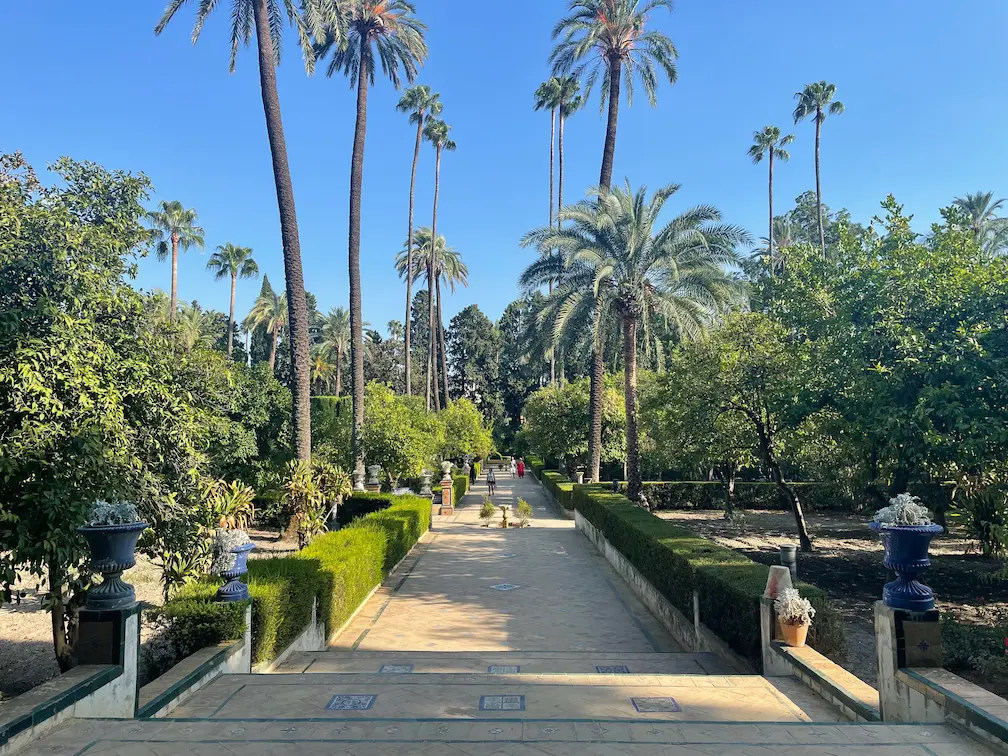
The gardens are an absolute highlight: a peaceful oasis under the scorching Seville sun, with fountains, tiled benches and shady walkways. Beyond the formal gardens, there’s also a park area with a small spot for refreshments, perfect for a quick break. Traveling with kids? Leave time for the gardens, where there’s room to run, and under-13s get in free.
A fascinating historical note: from 1504, the Alcázar’s Admiral’s Hall was part of the Casa de Contratación, which ran Spain’s trade with the Americas, and Magellan’s voyage around the world was planned in these rooms. So yes, history was literally made here.
⭐ On a budget? Entry is free for the last hour on Mondays (18:00–19:00 from April to September, 16:00–17:00 from October to March), but you still need to book that slot online.
Late Morning: Seville Cathedral and the Giralda
📍 Right next to the Alcázar, on Avenida de la Constitución · 🕘 Monday to Saturday from late morning, Sundays in the afternoon; hours change with the season and for services · 💶 €13 online (€14 at the door), the Giralda included; children up to 13 free
Tickets: on the Cathedral’s website, or with a priority-access tour of the Cathedral, the Giralda and the Alcázar (about three hours, meeting in Plaza del Triunfo). On Sundays, a limited number of free tickets are handed out at the Puerta del Príncipe ticket office from 17:00.
Right next to the Alcázar is Seville Cathedral, the largest Gothic cathedral in the world by most counts (Milan’s Duomo is its closest rival) and the final resting place of Christopher Columbus. From the outside, it’s absolutely massive.
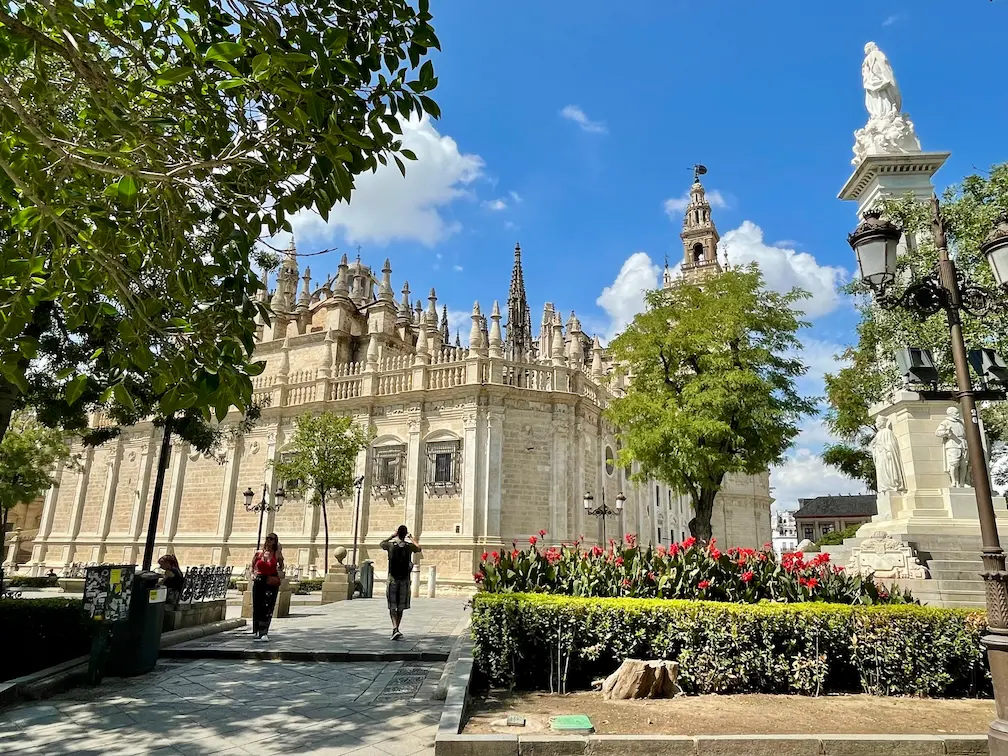
We only saw it from the outside. If you go in, the ticket includes the climb up La Giralda, the former minaret turned bell tower. Unlike most towers, there are no endless stairs: it’s a gentle climb up a series of ramps, originally designed so horses could carry people to the top, and the reward is a panoramic view over Seville’s rooftops.
Want to see the inside of the Cathedral, La Giralda and the Alcázar in one go, without the ticket lines? This priority-access tour covers all three with a local guide and skip-the-line entry, so you don’t have to book each one separately.
Before Lunch: Plaza de España
📍 At the edge of María Luisa Park, about 20 minutes’ walk from the Cathedral · 💶 Free
From the Cathedral, it’s about a 20-minute walk to Plaza de España, through charming streets. By the time you step into the plaza, you’ll understand why this spot completely stole our hearts. Even though we’ve been lucky enough to see places like Rome and Paris, this might be one of the most beautiful architectural sights we’ve ever laid eyes on.
💫 Here’s the twist: it looks centuries old, but it was built in 1929 for the Ibero-American Exposition, basically a huge world’s fair to showcase Spain’s influence and culture. The architecture is an incredible blend of Renaissance Revival and Moorish styles, with soaring towers, arched bridges, tiled alcoves and a canal that sweeps around its semicircle.
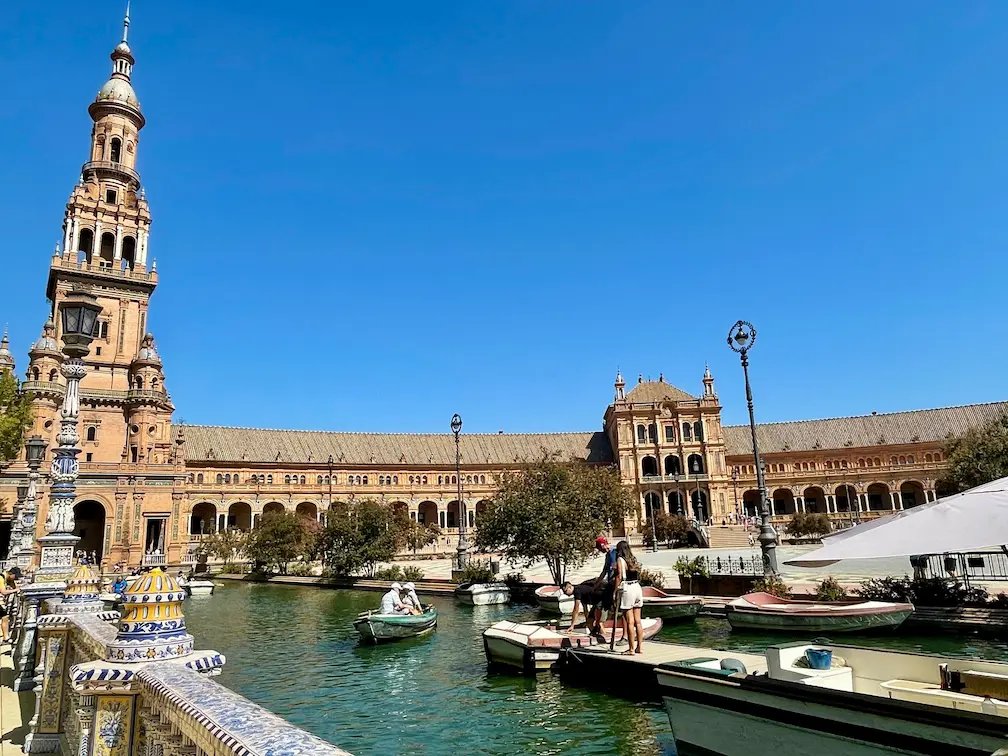
🎬 Fun fact for fellow Star Wars fans: parts of Attack of the Clones were filmed here, as the Naboo palace. Walking across the bridges, we couldn’t help but imagine Padmé and Anakin strolling right where we were.
What to Do at Plaza de España
- Rent a little rowboat and paddle along the canal for a romantic or just plain fun moment, and a good one with kids. We didn’t, but the boats are right there.
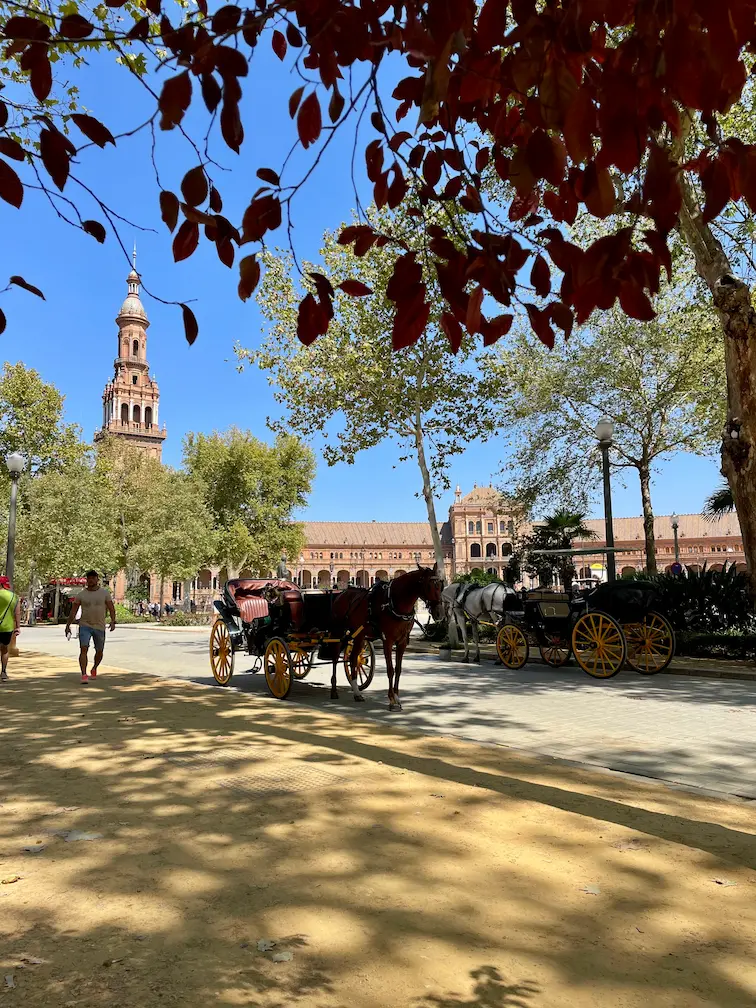
- Hop in a horse-drawn carriage and enjoy the surroundings like visitors did a century ago. We skipped this one too.
- Admire the ceramic benches: there are 48 in total, each one representing a different province of Spain with beautifully painted tiles.
- Take a thousand photos: the patterns, colors and shapes are mesmerizing, and every angle is a shot waiting to happen.
Lunch: Estraperlo, by María Luisa Park
📍 Calle Santa Rosa 4, in El Porvenir, on the east side of María Luisa Park, a short walk from Plaza de España · 🕘 Lunch Tuesday to Sunday from 13:30, dinner on Thursdays and Fridays; closed on Mondays
We had lunch at Estraperlo, and it was delicious. Everything is organic and seasonal, which makes it a bit more expensive by Seville standards, but we can recommend it. There are vegetarian, vegan and gluten-free options, and you can book a table on its website.
Hungry for more? Our local host’s favorite places to eat, including the neighborhood bar where dinner for two cost us €33, on two printable pages. Free PDF 👇
Afternoon: María Luisa Park
📍 Next to Plaza de España · 🕘 8:00 to 22:00, to midnight in summer · 💶 Free
Right next to Plaza de España is Parque de María Luisa, a peaceful, shaded retreat filled with fountains, exotic plants and the sound of birds. It’s the kind of place where locals actually come to sit, talk and escape the heat, and in the hottest hours of a Seville afternoon, you’ll appreciate that shade.
The park used to be the private gardens of the San Telmo Palace before being gifted to the city in 1893. Today, it’s one of Seville’s most beautiful public spaces.
How it went for us: we grabbed cold drinks from Kiosco Abilio, the only tapas bar inside the park, and just sat on a bench watching people go by: families, joggers and the occasional guitarist playing softly under the trees.
If you have time, wander off the main paths. You’ll find quiet corners, hidden fountains and tiled benches that make this park more than just a pass-through spot. With kids, it’s the easiest stretch of the day, with shade and room to run.
Evening: The Tapas Crawl We Did
📍 Meets in front of Catalina, Plaza Padre Jerónimo de Córdoba 12, about five minutes’ walk from Las Setas · 🕘 Evenings, about three hours
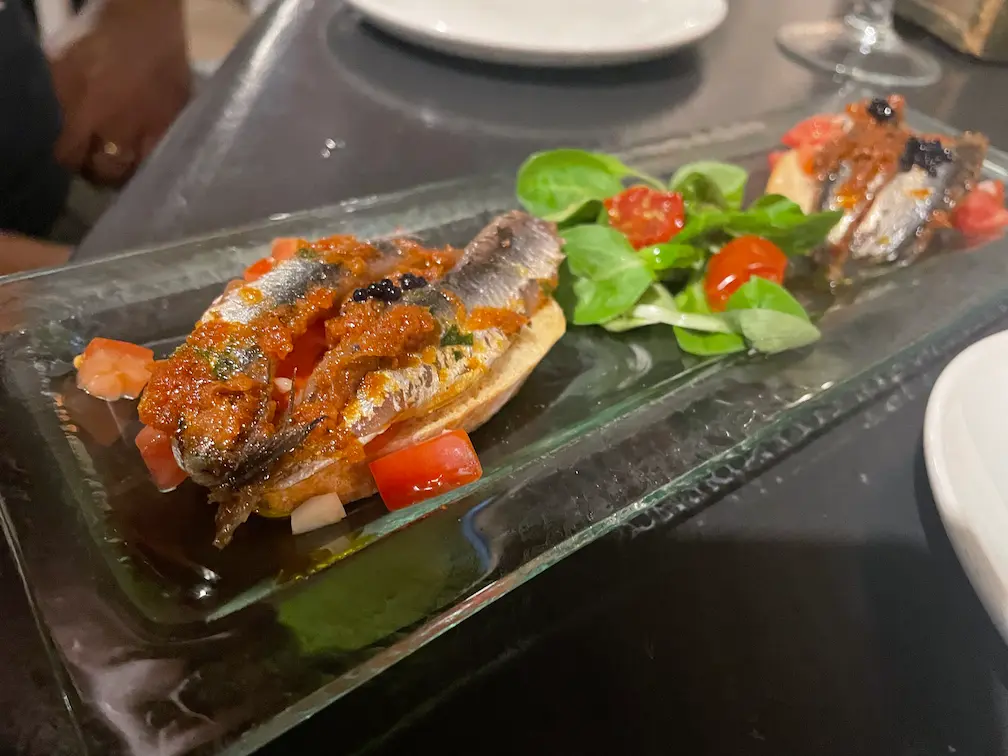
Tickets: the tapas tour we did, with ten tapas, a dessert and four drinks, in a group of up to ten. It isn’t suitable for vegetarians or vegans, and the menu can only be adapted for allergies or other dietary needs if you say so when you book.
No trip to Seville is complete without diving into its tapas culture. While you can absolutely hop from bar to bar on your own, we joined a guided tapas tour, and it turned out to be one of the highlights of our trip.
Not only did we get to taste authentic Andalusian dishes, from classic warm pork sandwiches to hearty Moorish stews and local wines, but we also learned the stories behind each dish and visited places we would never have found on our own. A tour is also the easiest way to understand how locals actually enjoy tapas: slowly, with good company, and paired with the perfect drink.
How it went for us: we did the tour at lunchtime; it now runs in the evening, as a tapas dinner. We were expecting our son on this trip, and our guide checked what was in each dish for us. That was a big help, as on our own it was hard to tell whether a dish had anything raw in it.
The tapas tour we did in Seville
Ten tapas, a dessert and four drinks over about three hours with a local guide, in a group of up to ten. It runs in the evening and meets a few minutes from Las Setas, so it rounds off the day. Mention any dietary needs when you book.
Late Evening: Las Setas (Metropol Parasol)
📍 Plaza de la Encarnación, in the heart of the old town · 🕘 9:30 to 1:00 every day · 💶 From €16, under-6s free, with family tickets
Tickets: on GetYourGuide, you get the official ticket with free cancellation up to 24 hours ahead and a pay later option.
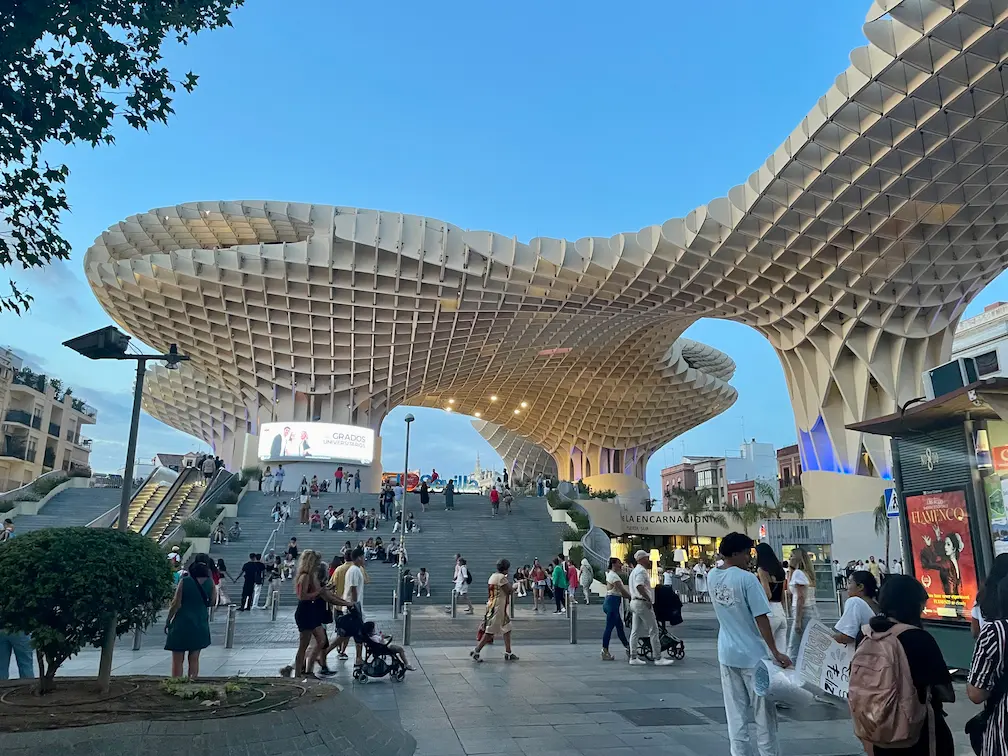
Finish your day at Las Setas, the wooden structure also known as the “Mushrooms of Seville”. Rising above Plaza de la Encarnación in the heart of the old town, it’s a striking contrast to the city’s centuries-old buildings, and at night the area comes alive with bars, cafés and buzzing nightlife.
Las Setas is a bit controversial with locals: some love its bold design, others think it doesn’t belong in Seville’s historic center. Either way, it’s a total eye-catcher and worth visiting. From the top, a walkway winds across the roof with sweeping views over the city. After dark there’s a light show on the walkway; if you’d rather see the sunset from up there, go before dinner instead.
The structure was only completed in 2011, and it’s one of the largest wooden structures in the world.
How it went for us: we finished our own evening here, strolling around and exploring the nearby bars, and we absolutely loved the vibe. It felt like a different side of Seville: younger, vibrant and full of energy.
Got a Second Day in Seville?
If you have a second day in Seville, you can slow down a little and get to know the city’s everyday side: neighborhoods where locals live, markets where they shop, and the river. This was our own second day, apart from the flamenco, which we didn’t get to. It’s also the day to go inside the Cathedral, if you skipped it on day one.
Morning: Triana
Begin your morning by crossing the Puente de Isabel II (Triana Bridge) into Triana, one of Seville’s most character-filled neighborhoods. Historically, this was a working-class district, home to sailors, Roma (gitano) families and artisans. Today, it still holds onto its own identity and is considered the spiritual home of flamenco.

Wandering its narrow streets, you’ll spot tiled facades, small flamenco bars and hidden courtyards. We loved the atmosphere here: less touristy than the old town, with a more local, everyday feel. It’s the kind of place where you just let yourself get lost, stopping for a coffee at a sidewalk café or browsing the traditional azulejo (ceramic tile) shops.

Mercado de Triana
📍 Plaza del Altozano, at the Triana end of the bridge · 🕘 The stalls open Monday to Saturday mornings; the bars stay open into the evening, and until late afternoon on Sundays
Once you’ve soaked in the neighborhood, head to the Mercado de Triana, right at the end of the bridge. This covered market is buzzing with life, full of stalls selling jamón ibérico, seafood, fresh produce, cheeses and local pastries.
We enjoyed sampling our way through the market: a plate of olives here, some cured ham there, and something sweet to finish. If you’re into food experiences, you can even join a Triana food tour or cooking class, like this one, which takes you behind the scenes of Andalusian cuisine.
The coolest part? The market sits on the site of the former Castillo de San Jorge, once the headquarters of the Spanish Inquisition. Its ruins lie underneath, with an interpretation center about the Inquisition, but it’s temporarily closed, so check whether it’s open before you plan around it.
Torre del Oro
📍 Paseo de Cristóbal Colón, on the river · 💶 €3, free on Mondays
After exploring Triana, walk back along the river toward the Torre del Oro, a 13th-century watchtower that once protected Seville’s port and stored treasures brought back from the Americas. Today, it’s a small naval museum, but most people come for the views.
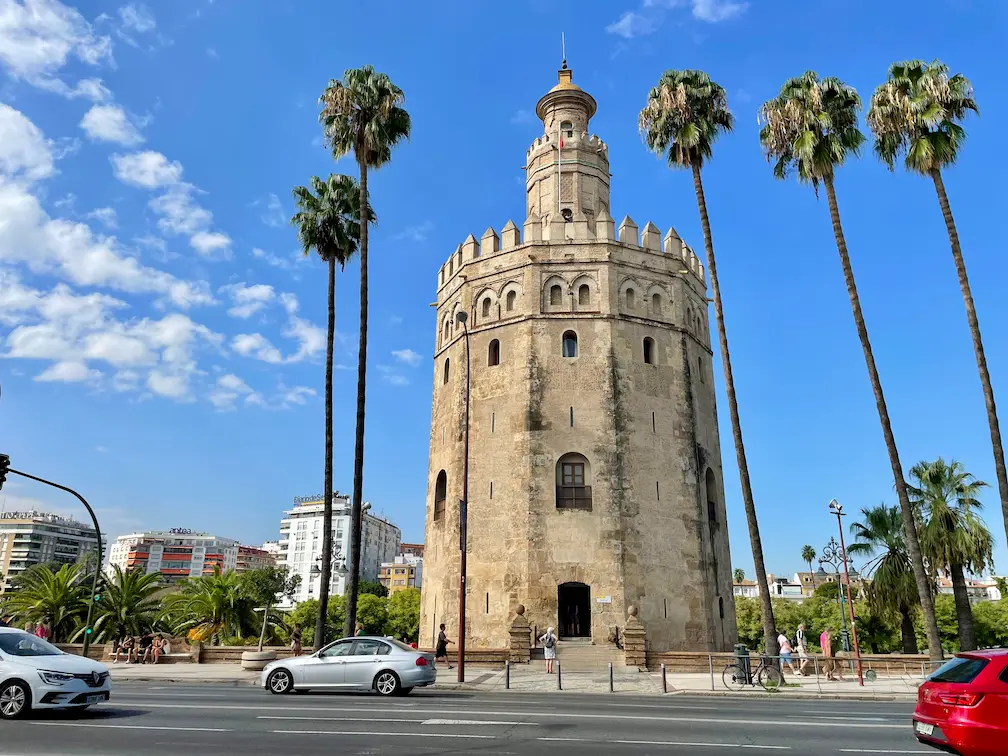
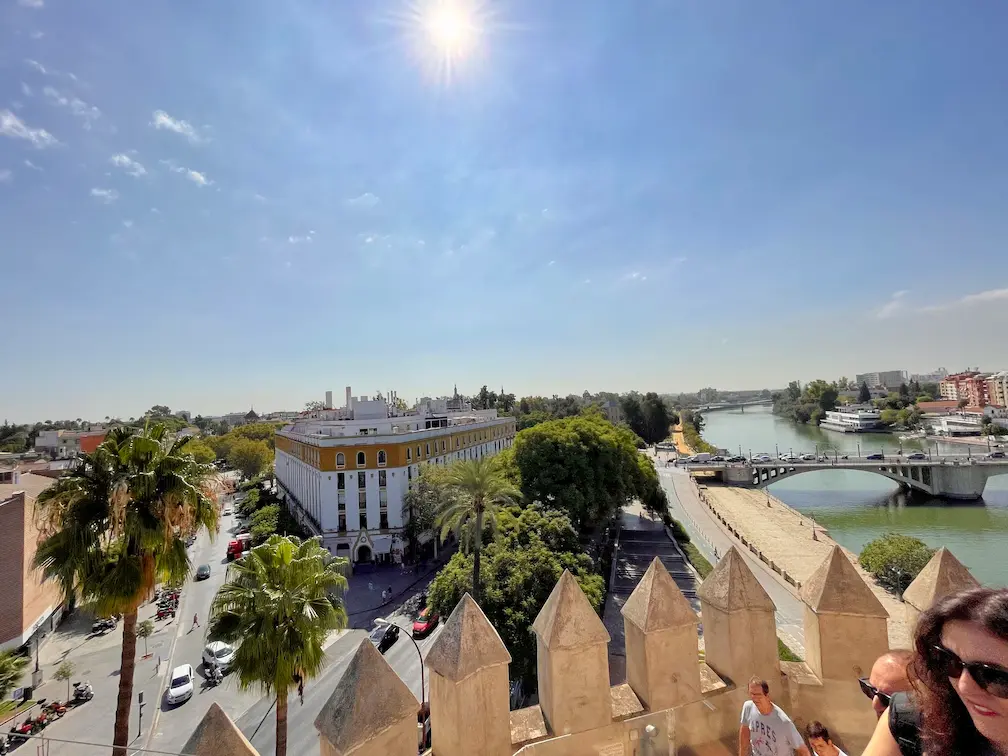
Entry is €3 (free on Mondays); when we went, a lady at the door took the money. It’s a short stair climb to the top, and the panoramic views over the river and the city are worth it.
That said, it’s a quick stop and not a must-see if your schedule is tight. But if you have the time, it’s a nice way to see the city from a different angle.
Evening: Flamenco
📍 Casa de la Memoria, Calle Cuna 6, a few minutes’ walk from Las Setas · 🕘 Shows usually at 19:30 and 21:00, about an hour each
Tickets: Casa de la Memoria on GetYourGuide costs about the same as booking with the venue, with free cancellation up to 24 hours ahead.
There’s no better way to end your time in Seville than with a flamenco performance. While Triana is often called the birthplace of flamenco, you don’t have to cross the river to see it: there are plenty of places, both in Triana and right in the historic center, with small, intimate shows.
We didn’t make it to a show on our trip, but this is the one we’d book: Casa de la Memoria, a small venue where the focus is entirely on the art form. The shows take place in the courtyard of an old house in the center, with live music and dancing, and it’s small, so book ahead.
Where to Stay in Seville
Stay in or near the old town, and the whole plan above is on foot.
🏨 Where we stayed
We stayed in an Airbnb in the southern part of Macarena, just north of the old town: a room in a local woman’s flat. It’s a shared home, so expect her to be there, though sometimes she travels herself and you have the whole place to yourself. She was a great host and gave us lots of tips, including her favorite places to eat (they’re in our free PDF ↑), and we’d book it again, with our son too.
We usually took the bus into the center, and a couple of times we walked, which took about half an hour. See the room on Airbnb.
If you’d rather stay in the old town itself, these are the areas to look at. We only stayed in Macarena, so this part comes from our research and our days walking around:
- Santa Cruz: the old Jewish quarter between the Cathedral and the Alcázar, with narrow lanes and little squares. The most central area, and the busiest.
- Around Las Setas: central and lively, with plenty of tapas bars, and the evening tapas tour starts nearby.
- El Arenal: between the Cathedral and the river, by the Torre del Oro.
- Triana: across the river, with a more local feel and the market on your doorstep, about 15 minutes’ walk from the Cathedral.
Check places to stay in the old town →
With kids, an apartment gives you a kitchen and more room: browse apartments in Seville →
Travelling Europe with little ones?
We can do the legwork.
We’ll check prices and availability for your dates and put the plan together: where to stay, what to book and what to skip. We’ve travelled Europe for fifteen years, and our little one has been coming along since before he could walk.
Plans from $189
Staying Longer? Day Trips from Seville
We spent four or five days in Seville and drove out on three day trips, all with a rental car:
- Córdoba: the Mezquita and the old town. The motorway was almost empty, an easy and relaxing drive; without a car, the high-speed train takes about 45 minutes.
- Cádiz: a laid-back seaside town with a walkable old town and promenade, great views and plenty of photo spots.
- Ronda, Setenil and Olvera: Ronda, probably the most famous day trip from Seville, and for a reason, plus two white villages, all in one long day.
Jerez and the Caminito del Rey are within reach too. We didn’t have time for either, and the Caminito needs booking well ahead.
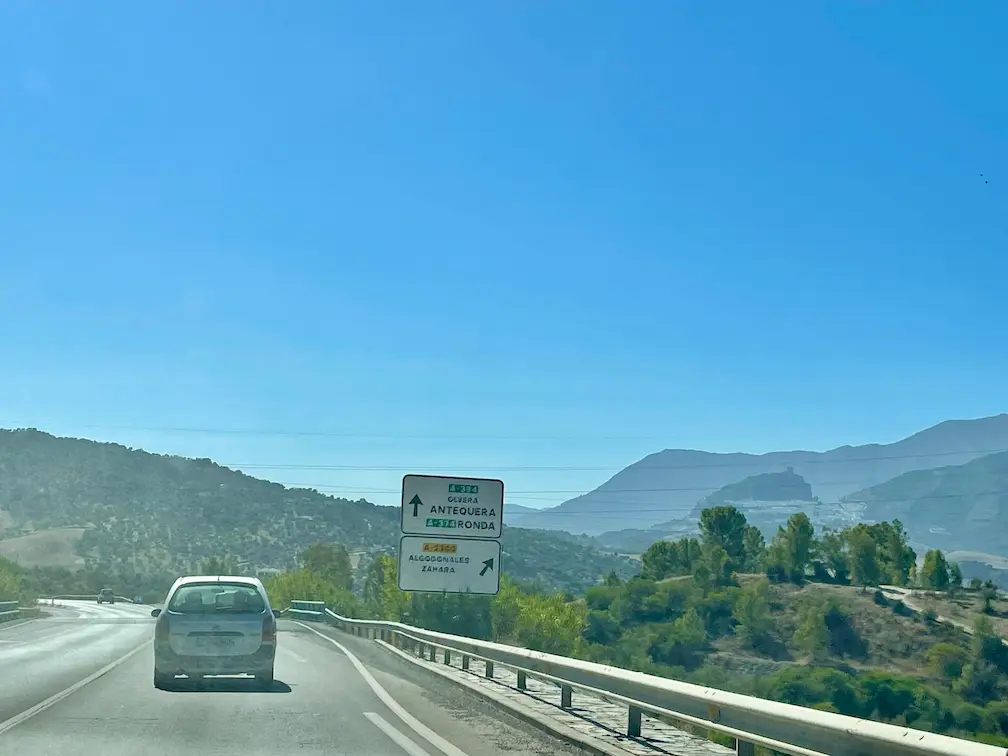
A car made all three easy. For two people, one guided Ronda tour costs about as much as a week’s rental outside the peak season, and for a family the gap is bigger. We booked ours through DiscoverCars at Seville airport, as we’ve done several times, and our guide to renting a car in Seville covers the rest.
Compare cars at Seville airport →
Best Time to Visit Seville
The best months are April–May and September–October, when the weather is warm but not unbearably hot. Summer (June to August) can reach 40°C (104°F) or more, which makes sightseeing tough. With kids in the warmer months, do the outdoor sights in the morning and save the afternoon for the park’s shade, as in the plan above.
How it went for us: in mid-September, it was still 33–34°C (91–93°F) during the day, and our host told us it had been around 40°C (104°F) the week before.
Semana Santa (Holy Week, 21–28 March 2027) fills the streets with processions, and two weeks later comes the Feria de Abril (13–18 April 2027, opening on the night of Monday 12 April), a week of flamenco dresses, horses and tents on the fairground across the river. Both show the city at its most festive, and its busiest: if your dates overlap, book your stay and the Alcázar early.
Final Thoughts: Is One Day in Seville Enough?
One day in Seville is enough for the essentials, if you start early: we crammed most of this plan into one day, and it was a busy one. Two days are better. The second gives you Triana, the river and an evening of flamenco, and lets the first day slow down.
Seville had been on our travel list for a long time, and we’re so glad we finally made it. With its mix of Moorish and Spanish architecture, lively plazas, orange-tree-lined streets and warm, welcoming people, Seville truly captures the essence of southern Spain.

What we loved most was the city’s balance: grand monuments like the Alcázar and the Cathedral, paired with everyday moments in Triana’s tapas bars or the shady corners of María Luisa Park. For us, Seville was more than just a stop on our trip around Spain. It was a highlight, and we can’t wait to return.
👉 Read next:
- Renting a Car in Seville: for the day trips, what it costs and what to know before you drive.
- Our 5-Day Basque Country Itinerary: Bilbao, San Sebastián and the coast, the part of our trip just before Seville.
FAQ: One Day in Seville
Is one day enough to see Seville?
Yes, for the essentials: the Real Alcázar, the Cathedral, Plaza de España, María Luisa Park and Las Setas. It’s a busy day, but you’ll cover the highlights; we did most of this plan in one day ourselves.
Are two days enough to see Seville?
Two days are perfect for a first visit. You’ll see the highlights without rushing, plus Triana, its market, the Torre del Oro and a flamenco show in the evening. To dive deeper into museums or take day trips to Córdoba or Ronda, you’ll need more time.
Do I need to book tickets for the Real Alcázar in advance?
Yes, definitely. The Alcázar is one of the most popular sights in Spain, and tickets sell out quickly, especially in spring and fall. Book a timed ticket online, or a tour that includes it, like the small-group tour we did. The ticket office only takes cards.
When is the best time to visit Seville?
The best months are April–May and September–October, when the weather is warm but not unbearably hot. Summer (June–August) can reach 40°C (104°F) or more, which makes sightseeing tough. Best time to visit has the Semana Santa and Feria dates.
Is Seville walkable?
Yes! Most major sights are within walking distance of each other. For longer stretches, you can also rent a bike, hop on a tram or a bus, or take a horse-drawn carriage for the experience.
Do I need a car in Seville?
Not in the city. We drove in once and found it a bit annoying: narrow one-way streets, with long detours if you miss a turn, though parking was OK. For day trips, a car is worth it, and we’d rent one again. We booked ours through DiscoverCars at Seville airport, and our guide to renting a car in Seville has the details.
Do people speak English in Seville?
In the tourist places, yes, and noticeably better than in the Basque Country, where we’d come from on the same trip. Do They Speak English in the Basque Country? compares the two.