The Ultimate Basque Country Itinerary—5 Days in Bilbao & San Sebastián


The Basque Country is one of those places that gets under your skin. It has its own language, its own culture, its own rules about how food should be eaten and how life should be lived—and once you’ve spent a few days here, it’s very hard to go back to anywhere that doesn’t have a pintxos bar on every corner.
Two cities anchor it all. Bilbao—gritty, confident, transformed by a titanium museum that changed the way the world thought about what a building could do. And San Sebastián—curved bay, perfect beach, medieval Old Town, and a culinary reputation that cities ten times its size would envy. They’re less than an hour apart by motorway. Between them lies some of the most beautiful coastline in Europe.
Five days is the sweet spot. Enough time to do both cities properly, take a couple of day trips along the coast, and still have room to sit somewhere with a glass of txakoli and do absolutely nothing for a while. This Basque Country itinerary is built around what we’ve actually done and loved—no filler, no tourist traps, just the things that are genuinely worth your time.
⭐ Quick Overview
The route: Bilbao (2 nights) → Basque coast day trip (1 day) → San Sebastián (2 nights) → Coastal day trip (1 day)
Direction: This itinerary runs Bilbao to San Sebastián, but it works equally well in reverse — start in San Sebastián and finish in Bilbao. Both directions make sense depending on your flights.
Getting around: A rental car is essential for this itinerary. Public transport connects the two cities well, but the day trips — Gaztelugatxe, Getaria, Zumaia — are either impossible or very difficult without a car. We always compare prices on DiscoverCars before booking.
🚘 Compare prices and book here 👉
Short on time? Jump to the 3-day version below.
Got more time? See the 7-day extension below.
What You'll Find In This Post:
Day 1: Bilbao—Arrive, Orient, Eat Everything
Arrive in Bilbao, pick up your rental car, and check in. Don’t try to do too much today—save your energy for exploring on foot and getting your bearings in the city.
Morning—Artxanda Viewpoint
Start with the best possible introduction to Bilbao: the view from Artxanda Hill. Take the Funicular de Artxanda from Plaza del Funicular—it runs every 15 minutes and reaches the top in just three minutes. From up here, Bilbao makes complete sense: the river snaking through the city, the green hills closing in on all sides, and the estuary opening up to the sea. It’s a breathtaking way to start your first morning.

At the top there’s a peaceful park, a handful of authentic Basque restaurants, and a public swimming pool. It’s a beloved local hangout rather than a tourist attraction, which is undoubtedly the right tone for the rest of your trip.
Afternoon—Casco Viejo & the Ribera Market
Head down into the Old Town, known as Casco Viejo. It’s not enormous, but it’s vibrant and authentically local—colorful buildings, narrow streets, Plaza Nueva with its elegant neoclassical arches, and Plaza Santiago in front of the cathedral. What we personally loved most about Casco Viejo was how real it felt: not overrun by tourists or filled with souvenir shops, but full of actual local life.

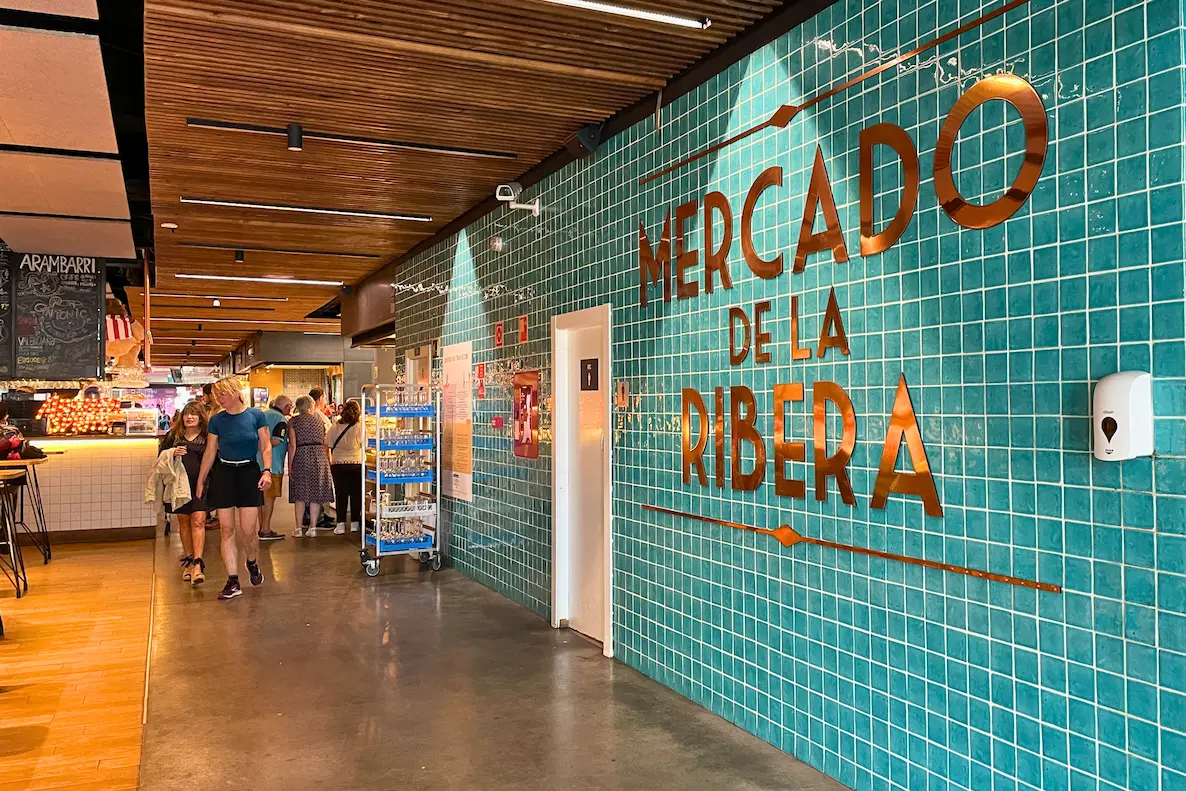
Before or after wandering, stop at Mercado de la Ribera, right by the river at the edge of the Old Town. The ground floor has a casual food court with about ten stalls—pintxos, pastries, local drinks—perfect for lunch. The rest of the market is fresh produce and fish, a great glimpse of everyday Bilbao.
Late Afternoon—Walk the Nervión
One of the most relaxing things you can do in Bilbao is walk along the Nervión River. Start from Arenal Park and follow the east bank along the tree-lined promenade. You’ll pass the Mercado de las Flores and reach the Zubizuri Bridge—a sleek white pedestrian crossing that leads you directly to the Guggenheim. Save the museum for tomorrow, but walk past it and take in the exterior. The titanium cladding changes colour in every light. At this time of day, it’s worth stopping for a while.
Evening—Pintxos Crawl
Your first evening in Bilbao should be spent doing a pintxo crawl through the Old Town.
🤩Some of our favourites: La Olla on Plaza Nueva, Berton Sasibil in the Casco Viejo for the meat skewers, and Atseden in the downtown area for something slightly more modern. The rule is simple—have one or two pintxos and a drink at each bar, then move on. Don’t overthink it.
Day 2: Bilbao—The Guggenheim & the Coast
Morning—The Guggenheim Museum
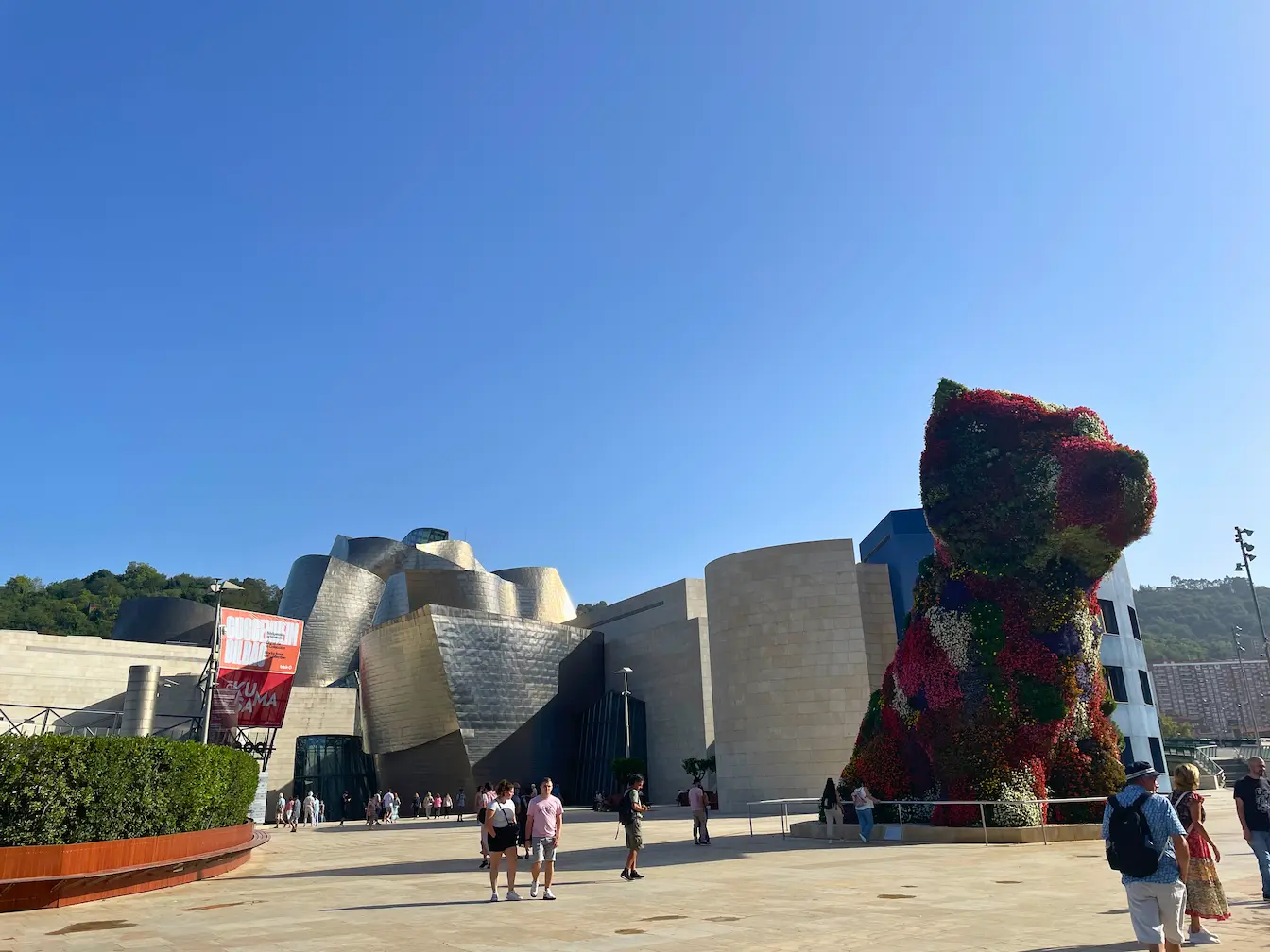
Give the Guggenheim a proper morning. With its futuristic titanium design by Frank Gehry, it’s by far Bilbao’s most recognisable landmark, and since opening in 1997, it has played a huge role in transforming the city into a cultural destination. Inside, you’ll find rotating exhibitions of contemporary and modern art.
We’d strongly recommend joining a guided tour—many of the exhibitions are quite abstract and genuinely difficult to interpret without context. A guide makes it a completely different, much richer experience.
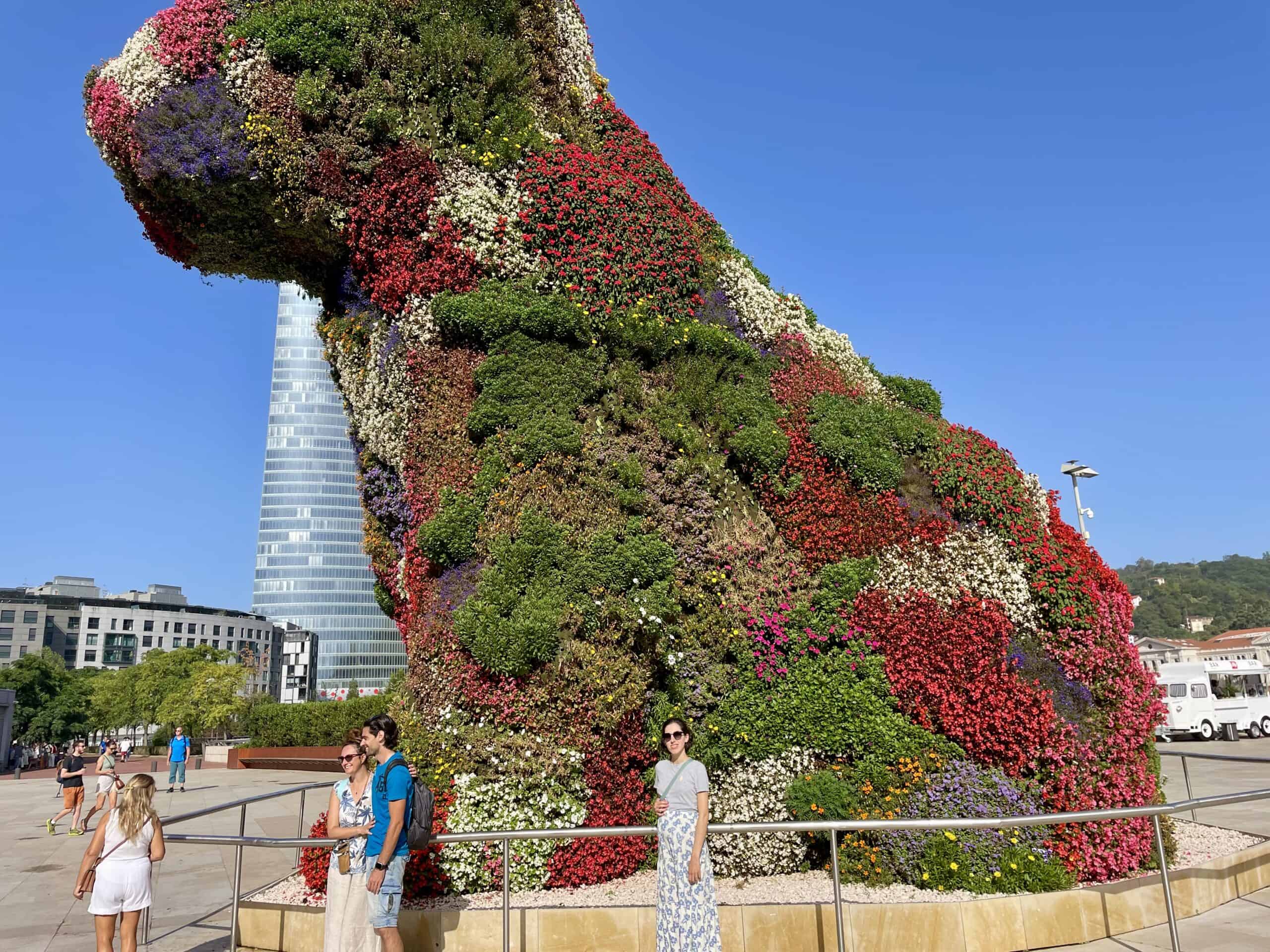
Before you leave, stop to see The Puppy—a 13-metre flower sculpture of a West Highland Terrier by Jeff Koons, covered in thousands of seasonal blooms just outside the entrance. We hadn’t heard of it before our visit and it instantly stole our hearts. Quirky, beautiful, and utterly Bilbao.
Afternoon—Getxo or Plentzia
After the museum, take the afternoon to escape the city slightly. Both Getxo and Plentzia are reachable by metro from central Bilbao—but a car makes it much more comfortable. Getxo has a charming harbor and Belle Époque architecture. Plentzia has a wide, calm sandy beach and shares a beautiful bay with neighboring Gorliz—perfect for families or anyone wanting to sit by the water after a morning on their feet in the museum.
If you’re feeling adventurous, book a tasting at Bodega Submarina Crusoe Treasure in Plentzia—the world’s first underwater winery, where wines are aged beneath the sea. One of those experiences that sounds too strange to be real until you’re actually there.
Evening—Back in Bilbao
Return to Bilbao for dinner. If you want a step up from last night’s pintxos crawl, Bilder Boutique Hotel’s La Palma restaurant in the Old Town is worth trying even if you’re not staying there.
Day 3: The Basque Coast—Gaztelugatxe, Bermeo & Mundaka
Today you need the car. This is one of the most spectacular driving days you’ll have anywhere in Europe—dramatic Atlantic cliffs, colorful fishing villages, and one of the most iconic sights in the entire Basque Country. Take the coastal road rather than the motorway wherever possible. The journey is as much the point as the destinations.
Morning—San Juan de Gaztelugatxe
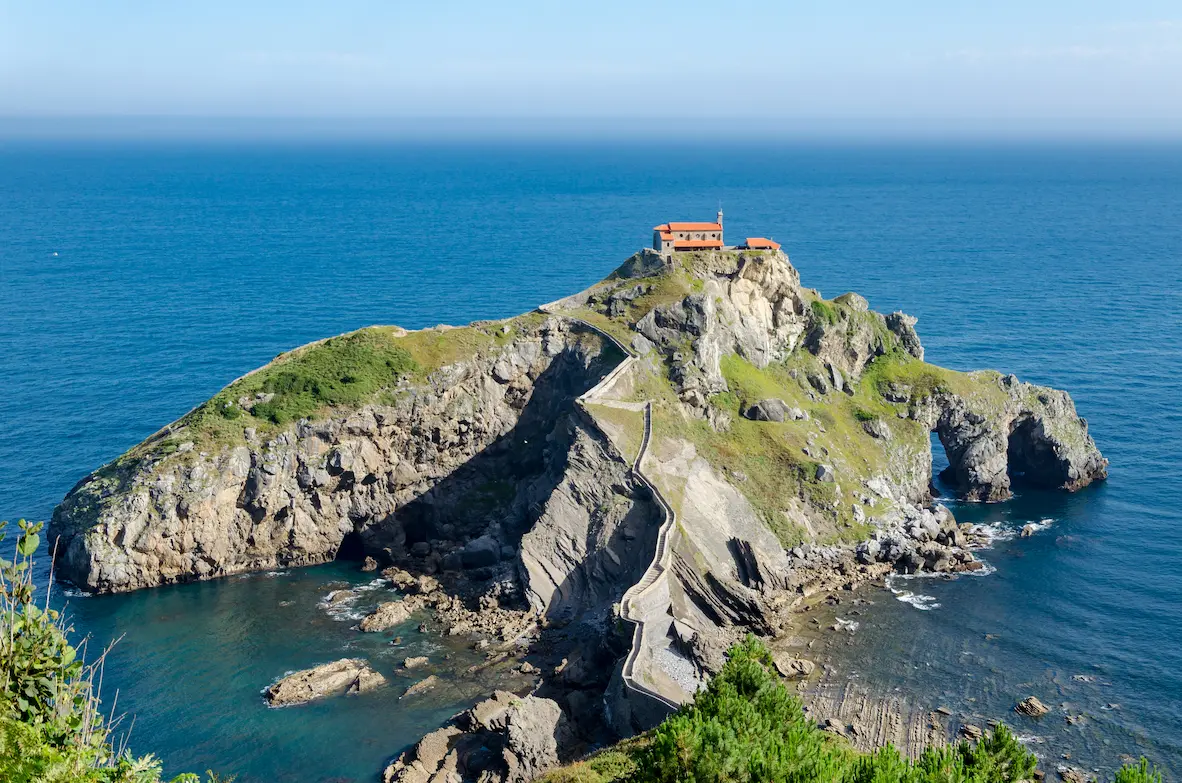
This is non-negotiable. San Juan de Gaztelugatxe is a tiny islet connected to the mainland by a winding stone bridge and 241 steps, topped by a small chapel. It shot to worldwide fame as Dragonstone in Game of Thrones, but even if you’ve never watched the show, the natural beauty here is absolutely worth the trip. It’s one of the most dramatic sights in the whole of northern Spain.
After crossing the stone bridge, climb to the chapel at the top. Legend says you should ring the bell three times, make a wish, and banish bad spirits. The views from up there are unforgettable—the Atlantic crashing below, the cliffs stretching in both directions.
⚠️ During high season (especially summer), a free timed-entry ticket is required. Check the official website before visiting and aim to go early to beat the crowds. This one fills up fast. Note: the ticket website is in Spanish only. We’ve found this website to provide a good guide on booking in English.

Late Morning—Bermeo
A 15-minute drive brings you to Bermeo—colorful houses, fishing boats, a strong maritime heritage. Once a major whaling port, today it’s a great spot for seafood lovers. Try marmitako (a hearty tuna and potato stew), white tuna, or anchovy preserves. The Fishermen’s Museum in the historic Ercilla Tower is worth a quick stop, and La Tala viewpoint gives you sweeping panoramas of the dramatic cliffs and Izaro Island offshore.
Afternoon—Mundaka
Just next to Bermeo, Mundaka is a tiny fishing town with a massive reputation in the surfing world—home to Europe’s longest left-hand wave, drawing surfers from around the globe. Even if you’re not there to surf, it’s worth an hour of your time. The fishing port is perfect for a quiet coffee with a view, and the Santa Catalina chapel perched above the estuary has some of the best panoramas of the Urdaibai Biosphere Reserve you’ll find anywhere.
Late Afternoon—Drive to San Sebastián
Head towards San Sebastián. The drive takes about an hour on the motorway. Check into your hotel and recover from the day with pintxos in the Old Town—your first taste of San Sebastián’s culinary scene.
Day 4: San Sebastián—La Concha, the Old Town & Mount Igueldo
San Sebastián is one of those cities that’s almost impossible to do wrong—but the right approach makes it unforgettable. Start high, work your way down to the sea, and let the evening take care of itself.
Morning—Mount Igueldo
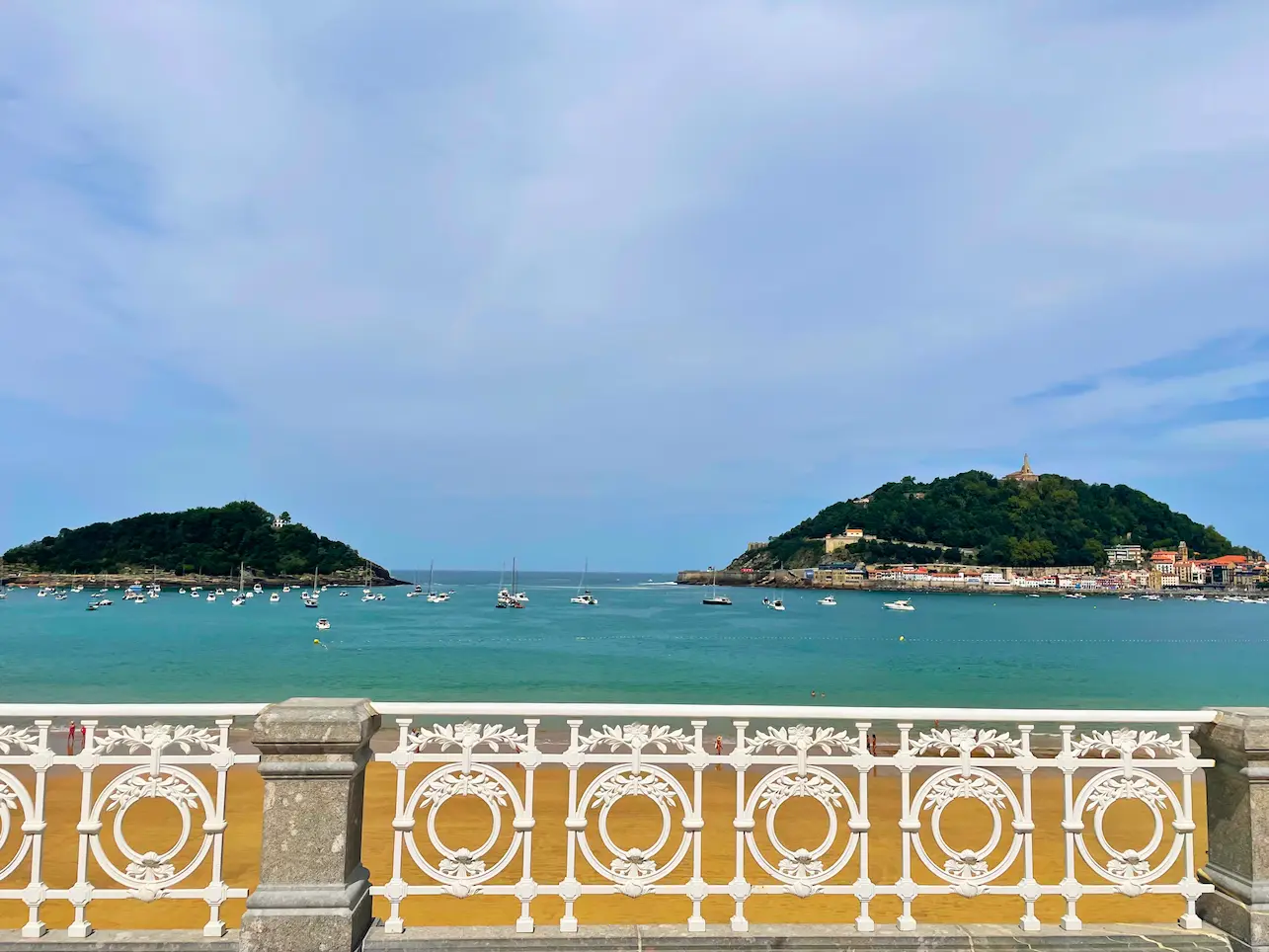
Begin at Mount Igueldo—a small hill at the western end of the city with one of the most famous views in Spain. From the top, you can see the whole city with its beautiful La Concha Bay, where the ocean calmly touches the two beaches, and the gorgeous green hilly landscapes of the Basque Country stretching into the distance. It’s a breathtaking way to start your first morning in San Sebastián.

Take bus 16 or 47 to Plaza del Funicular (or walk, depending on where you’re staying), then the funicular to the top. It runs every 15 minutes and the return ticket is about €5. At the summit, pay the small fee to go up the tower—the 360-degree view from the terrace is the best in the city. There’s also a vintage amusement park up there that’s been running since 1925, which is worth a look even if you don’t use any of the rides.
Late Morning—El Peine del Viento & La Concha
From Plaza del Funicular, it’s a 10-minute walk to El Peine del Viento—contemporary iron sculptures set against the sea, a secluded little spot where you can spend a few minutes enjoying the fresh sea breeze and listening to the waves on the rocks.

From there, walk along La Concha. It’s 2.8 km back to the Old Town along two beaches and one of the most beautiful urban promenades in Europe. La Ondarreta comes first, then the famous La Concha beach itself—a kilometer of shell-shaped golden sand, calm water, and extraordinary views of the bay. Don’t rush this walk. At the end you’ll pass the Town Hall, originally built as a casino, and Alderdi Eder Park with its old carousel and palm trees.
Afternoon—Old Town & Pintxos
Spend your afternoon in the Old Town—Parte Vieja. It’s a small area with many narrow streets, a few shops, and around 500 bars and restaurants. Most of them are pintxos bars. This is where San Sebastián earns its culinary reputation, and an afternoon here is one of the great pleasures of any trip to northern Spain.

We did a guided pintxo tour with a local on our visit, and we’d highly recommend it if you want to understand the culture rather than just the food. But you can absolutely go it alone too.
🌟 The golden rule: try as many bars as you can, because each one has its own house specials that you can only get there.
Evening—La Viña
End the night at La Viña. This iconic restaurant in the Old Town is where the famous burnt Basque cheesecake was first created in the 1990s—it’s since gone viral worldwide and for good reason. The perfect final stop on your first day in San Sebastián.
Day 5: The Coastal Road—Hondarribia, Getaria & Zumaia
Your last full day, and arguably the most scenic. This coastal drive strings together three very different but equally rewarding stops—a medieval border town, a tiny fishing village with extraordinary seafood, and one of the most dramatic stretches of coastline in Spain. Take the N-634 coastal road rather than the motorway. The views along this route are stunning—rolling green hills, dramatic cliffs, charming towns that feel like they’ve been frozen in time. Driving this road slowly, stopping whenever something catches your eye, is one of the best things you’ll do on this whole trip.
Morning — Hondarribia
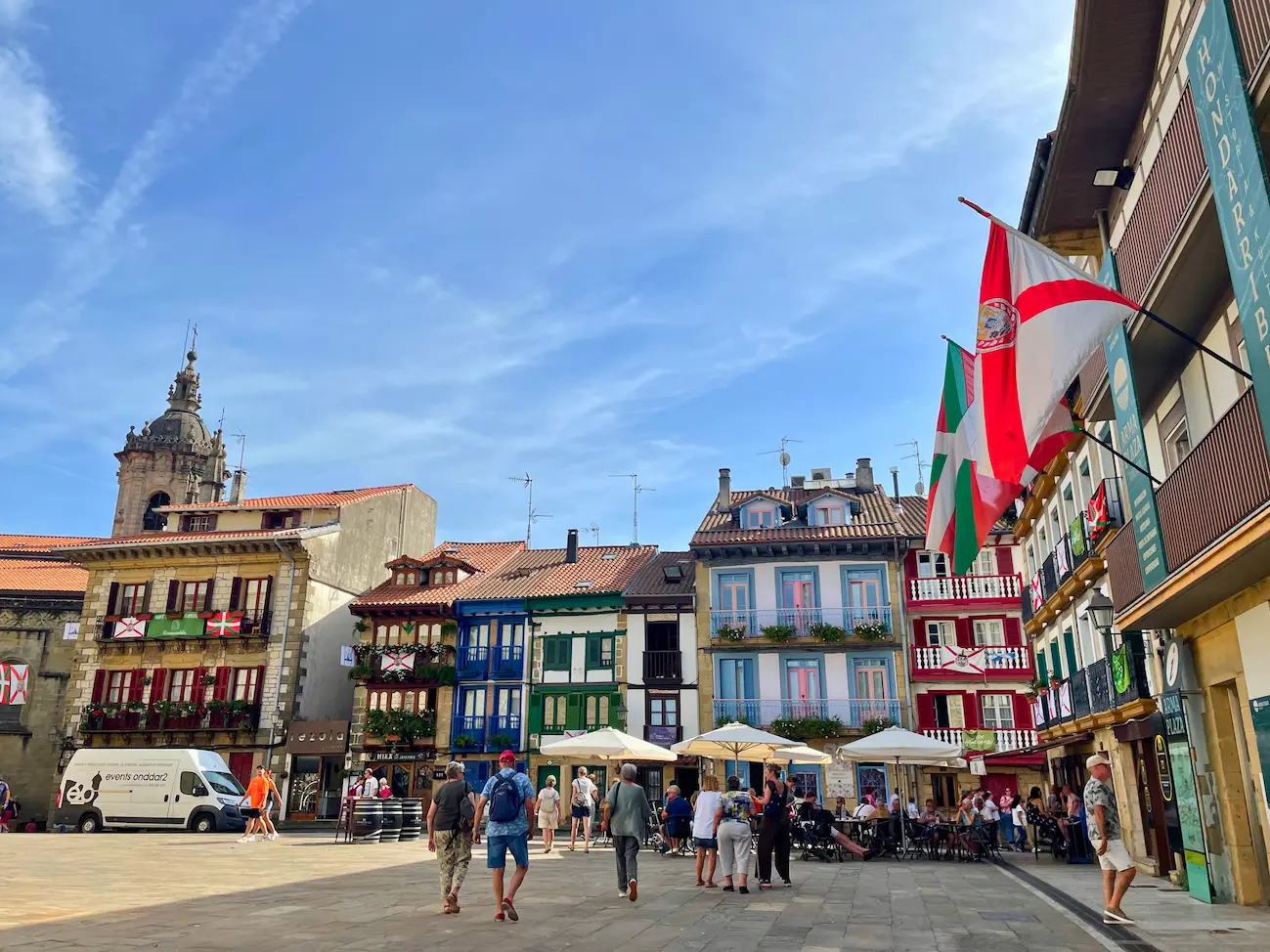
Start with a 30-minute drive to Hondarribia—one of the prettiest towns on the Basque coast, right on the French border. It has a strong French influence and a charming cobbled Old Town surrounded by a medieval wall. Spend a couple of hours wandering through colourful buildings with wooden balconies, grabbing a coffee in the vibrant marina district, and exploring the old fortifications and narrow alleys. It feels like you’ve stepped back in time.
Late Morning — Getaria
Drive back along the coast to Getaria—tiny, packed with character, and the place that genuinely stole our hearts on this stretch of coastline. It has two beaches, a small old centre, and some of the best seafood we’ve ever had. In season (May to August), you’ll find grilled sardines on every menu—and they’re worth the hype. Even though it’s small, we spent hours here just walking around, relaxing on the beach, and hopping between pintxos bars.
Getaria is also the birthplace of designer Cristóbal Balenciaga, and there’s a museum dedicated to his work if that’s your thing.
Afternoon — Zumaia
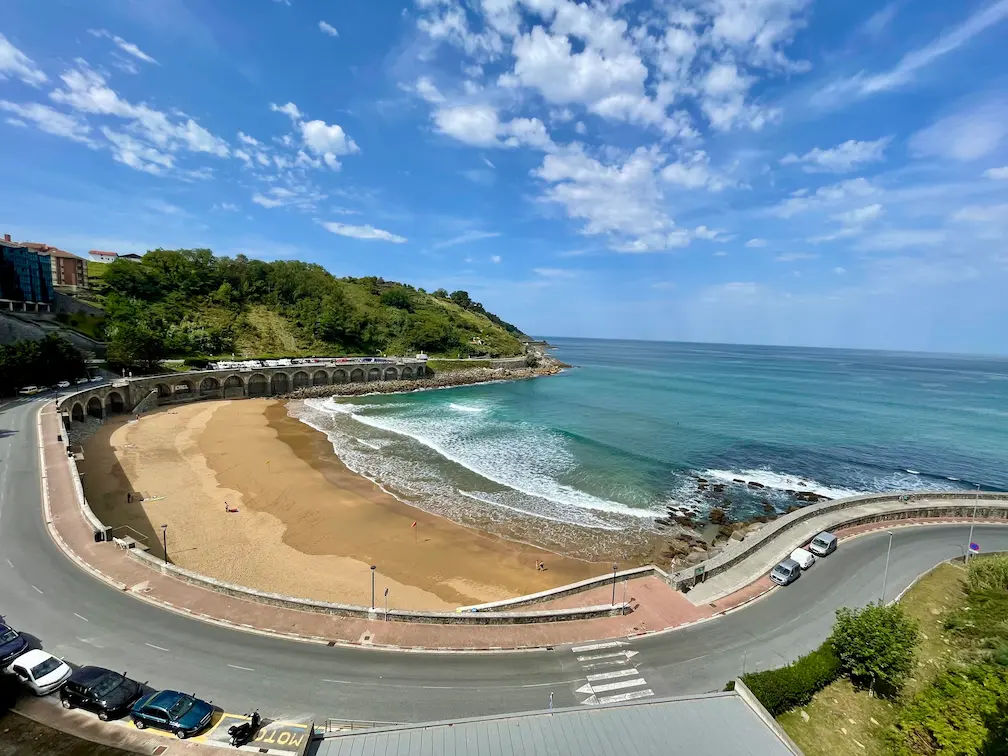
A short drive west brings you to Zumaia—all about nature, drama, and the Atlantic at its most powerful. The flysch cliffs here—layers of rock stacked like the pages of a book, part of a UNESCO Geopark—are some of the most extraordinary coastal scenery in Spain. Walk along the cliffs from Itzurun Beach and feel the full force of the ocean. This beach was also a filming location for Game of Thrones (also Dragonstone), so fans will definitely want to stop here too. Zumaia also has a second beach, Santiago, which is calmer and more family-friendly if you want a swim before heading back.
Evening—Back to San Sebastián
Return to San Sebastián for your final evening. Wander the promenade at sunset, find a bar in the Old Town, and order more pintxos than you think is sensible. You’ve earned it.
Where to Stay in the Basque Country?
For a five-day itinerary split between two cities, you’ll want two nights in Bilbao and two nights in San Sebastián. Here are our picks:
In Bilbao—Bilder Boutique Hotel
Our top mid-range pick in the Old Town. Thirty-nine rooms in the Casco Viejo, a restaurant worth visiting even if you weren’t staying there, and the kind of attention to detail that actually makes a difference. Parking discount available at the Arenal car park 300 meters away—useful when you have a rental car.
Compare prices and book here 👉
In Bilbao—7 Kale B&B (budget)
For a more affordable option, 7 Kale on Calle Santa María is one of the warmest, most genuine places to stay in the Old Town. Run by Patricia with real care, excellent breakfast included, and free luggage storage so your last morning in the city is stress-free.
Compare prices and book here 👉
In San Sebastián — Lasala Plaza Hotel
Our top pick in San Sebastián—a boutique adults-only hotel dating from 1917, two minutes from La Concha promenade and right at the edge of the Old Town. The rooftop terrace above the Old Town rooftops is exceptional. Book early—it fills up fast.
Compare prices and book here 👉
In San Sebastián—Pensión Itxasoa (budget)
For a more affordable base, Pensión Itxasoa sits right between La Concha and Gros beach in the Old Town, with sea views from almost every room. Owner-run, personal service, unbeatable location for the price.
Compare prices and book here 👉
⚡ Short on Time? Here’s the 3-Day Version
Three days isn’t enough to do everything, but it’s enough to do the most important things properly. Here’s how we’d cut it down:
Day 1: Bilbao
Artxanda viewpoint in the morning for the best introduction to the city. Casco Viejo and Mercado de la Ribera in the afternoon. Pintxos crawl in the evening. If you have energy, walk the Nervión and see the Guggenheim exterior at dusk.
Day 2: Guggenheim + Gaztelugatxe
Guggenheim Museum first thing in the morning—book your entry and, ideally, a guided tour in advance. After lunch, drive to San Juan de Gaztelugatxe—it’s about 40 minutes from Bilbao. Climb the 241 steps, ring the bell, and take in the view. Drive on to San Sebastián in the evening (about 1 hour from Gaztelugatxe). Check in and have pintxos in the Old Town.
Day 3: San Sebastián
Mount Igueldo in the morning for the view. Walk down along El Peine del Viento and La Concha beach to the Old Town. Spend the afternoon doing a pintxo crawl through the Parte Vieja. End at La Viña for the cheesecake.
🗓️ Got More Time? Here’s How to Extend to 7 Days
Two extra days give you room to breathe, go deeper into the countryside, and tick off a few more of the Basque Coast’s best spots. Here’s what to add:
Extra Day A—Gernika & the Urdaibai Reserve
Add this between Day 2 and Day 3 of the main itinerary as a second day out of Bilbao. Gernika is a town forever marked by history—bombed during the Spanish Civil War, it became an international symbol of the horrors of war and was immortalised by Picasso’s famous painting. Visit the Gernika Tree and the Meeting House, symbols of Basque self-governance and freedom, and take time at the Gernika Peace Museum. It’s more than a stop—it’s a meaningful experience. Combine it with Arteaga Castle nearby, a neo-Gothic fairytale building right in the heart of Urdaibai, and the Urdaibai Biosphere Reserve itself for a full day out of the city.
Extra Day B—Tolosa & Inland Basque Country
Add this as a day out of San Sebastián, before or after the coastal drive. Tolosa is one of the best day trips from San Sebastián for anyone interested in Basque culture and food. The town is famous for its Saturday market—one of the biggest in the region—with fresh produce, cheeses, peppers, and pastries. It’s also home of the beloved Tolosa black beans (alubias de Tolosa), and if you’re into hearty traditional dishes, this is the place to try them. About 30 minutes from San Sebastián by car or train.
Practical Information
Getting There
Both Bilbao and San Sebastián have their own airports. Bilbao Airport has good connections to most major European cities. San Sebastián Airport is smaller—if you can’t find a direct flight, flying into Bilbao and out of San Sebastián (or vice versa) works perfectly for this itinerary and avoids any backtracking.
Getting Around—Rent a Car
A rental car is essential for this itinerary. The two cities are well connected by public transport, but the day trips—Gaztelugatxe, Getaria, Zumaia, and Mundaka—are either very difficult or impossible without a car. Renting one gives you the freedom to take the coastal road, stop whenever something catches your eye, and access the smaller villages that don’t show up on bus timetables.
One important note: parts of central Bilbao and San Sebastián have restricted vehicle access, including Low Emission Zones. Park on the outskirts or in a car park near your hotel and use public transport or your feet for city exploration. For more info on the LEZ in San Sebastián, you can check out this.
Best Time to Visit
The Basque Coast is genuinely worth visiting year-round, but the sweet spot is May–June or September–October. The weather is warm and pleasant, prices drop compared to summer, and the crowds are manageable. July and August are peak season—lively and fun, especially if you’re around for San Sebastián’s Semana Grande or Bilbao’s Aste Nagusia festival, but expect higher prices and more people everywhere. The coastal road is beautiful in any season, though spring and autumn give you the most dramatic light.
What to Pack
The weather along the Basque Coast can change quickly. Pack layers, sunscreen, and always check the forecast before heading out on a day trip. Rain is common—even in summer—so a light rain jacket is a smart move. Comfortable walking shoes are essential, especially for Gaztelugatxe’s 241 steps and the cliff walks at Zumaia. And bring an appetite. You’ll need it.
Final Thoughts
The Basque Country is one of those places that rewards the traveller who slows down. The journey between Bilbao and San Sebastián—along the coast, through the fishing villages, past the cliffs and the vineyards and the medieval towns—is as much the point as either city. Drive slowly. Stop for txakoli at a roadside bar. Ring the bell at Gaztelugatxe. Eat sardines in Getaria. Watch the sunset from La Concha promenade.
Five days allows you enough time to do all of it without rushing. And if you find at the end of the week that you’re not quite ready to leave—that’s the Basque Country doing its job.
Do I really need a car for this itinerary?
For the cities themselves—no. Bilbao and San Sebastián are both very walkable, and their public transport networks are excellent. But for the day trips—Gaztelugatxe, Mundaka, Bermeo, Getaria, Zumaia, Hondarribia—a car makes the difference between a frustrating, time-consuming logistics puzzle and a genuinely enjoyable day out. We’d strongly recommend renting one for the full five days.
How far apart are Bilbao and San Sebastian?
About 100 km (62 miles), which is roughly an hour on the motorway. On the coastal road it takes longer—allow 90 minutes to two hours if you’re taking the scenic route—but it’s one of the most beautiful drives in Spain, so the extra time is well spent.
Which city should I start in?
Either works well. We’ve written the itinerary starting in Bilbao and ending in San Sebastián, which makes logical sense geographically if you’re flying in and out of the same airport. But if your flights work better the other way—fly into San Sebastián, out of Bilbao—just reverse the order. Both cities stand on their own as starting points.
Is English widely spoken in the Basque Country?
English is not widely spoken in the Basque Country—not by younger or older generations, and not reliably even in the tourist sector. A few words of Spanish go a long way and are always appreciated. In the most touristy parts of Bilbao and San Sebastián you’ll manage fine, but once you’re out in the smaller villages on the day trips, don’t rely on English being understood.
Is parking easy to find in the towns?
Most destinations have public parking lots near the centre or beach. Parking is usually paid but affordable. The exception is Gaztelugatxe in high season, where parking can be very limited—arrive early or expect a walk from wherever you manage to find a spot. In Bilbao and San Sebastián, use a car park near your hotel rather than trying to park on the street in the centre.
Can I do a day trip to France?
Absolutely. From San Sebastián, Saint-Jean-de-Luz and Biarritz are both popular French Basque destinations just 30–45 minutes away. From Bilbao, you can reach them in about 1.5 to 2 hours. Hondarribia—one of the stops in the Day 5 itinerary—is right on the border, and you can take a small boat across to Hendaye in France in just a few minutes.