Burgas in Summer: Things to Do, Where to Stay, Best Day Trips

Great outdoor restaurants, cafés and bars, many of them with a sea view. A walkable downtown, perfect weather, and connections to dozens of towns and beaches along the coast. All of those reasons make Burgas a perfect place to start your summer holiday in Bulgaria.
Although relatively small, Burgas is the second-largest city on the Bulgarian Black Sea coast, and it has a lot to offer in the summer.
If you’re planning a summer trip to Bulgaria’s Black Sea coast but aren’t sure where to start or what to do, Burgas might be your best bet.
If that sounds like your kind of holiday, scroll down for the best things to do in Burgas in summer.
What You'll Find In This Post:
Is Burgas the right base for you?
Burgas is a real, working, living city of about 200,000 people — not a resort. That’s what sets it apart from a lot of other places along the coast, like Sunny Beach up north.
So if you’re looking for an all-inclusive hotel complex you never have to leave, Burgas isn’t for you. Skip it.
But if you want a more authentic Bulgarian summer, in an actual city with all the benefits that brings, keep on reading!
To explore Burgas at a relaxed pace before moving on somewhere else, plan about three days. It also works brilliantly as a base for your whole holiday — nothing on the southern Black Sea coast is more than a 90-minute drive away, and most places are much closer.
Getting to and around Burgas
How to get to Burgas?
Burgas has one of the busiest airports in Bulgaria in the summer. From May until the end of September there are charter flights from all over Europe, so flying in is easily the best option if there’s a good connection from your city.
Your second-best bet is to fly into Varna, the other big Black Sea city in Bulgaria, and then take a shuttle or rent a car. It’s only 120 km away, but there’s no motorway, and the road gets really busy in the summer months, so plan about two hours for the trip. Driving through the mountainous road in the summer can be quite tricky, as the road gets very busy.
If you want to have piece of mind and relax, book a private transfer instead. This is a good provider with excellent reviews. Check the prices for your dates here ->
Alternatively, you can fly to Sofia and catch a bus or train or rent a car and drive. It’s around 380 km, and there is a motorway all the way to the coast. Timewise, renting a car is far better than the bus or train, and it also makes you much more flexible if you want to explore the coast while you’re here.
Flying into Sofia or Varna?
We compare prices on DiscoverCars before booking — it’s saved us hundreds.
How to get around in Burgas?
Burgas has a pretty good public transport system with buses. They reach even the farthest neighbourhoods and usually run max. every 10 minutes during the day. You can find the bus network map here. A single journey costs 0.80 EUR and you can pay by card directly on the bus. Many buses also still have ticket inspectors that sell tickets when you board, cash only though.
For more information on tickets and timetables, check the official Burgas Bus website.
For parking in the city, look for the clearly marked blue and green zones. You can pay with coins at a parking machine or use the Urbo parking app.
Lastly, Burgas is really walkable, especially if you have booked accommodation in the city center or one of the central neighbourhoods (for example, Lazur).
Best things to do in Burgas
Burgas Sea Garden and the Bridge
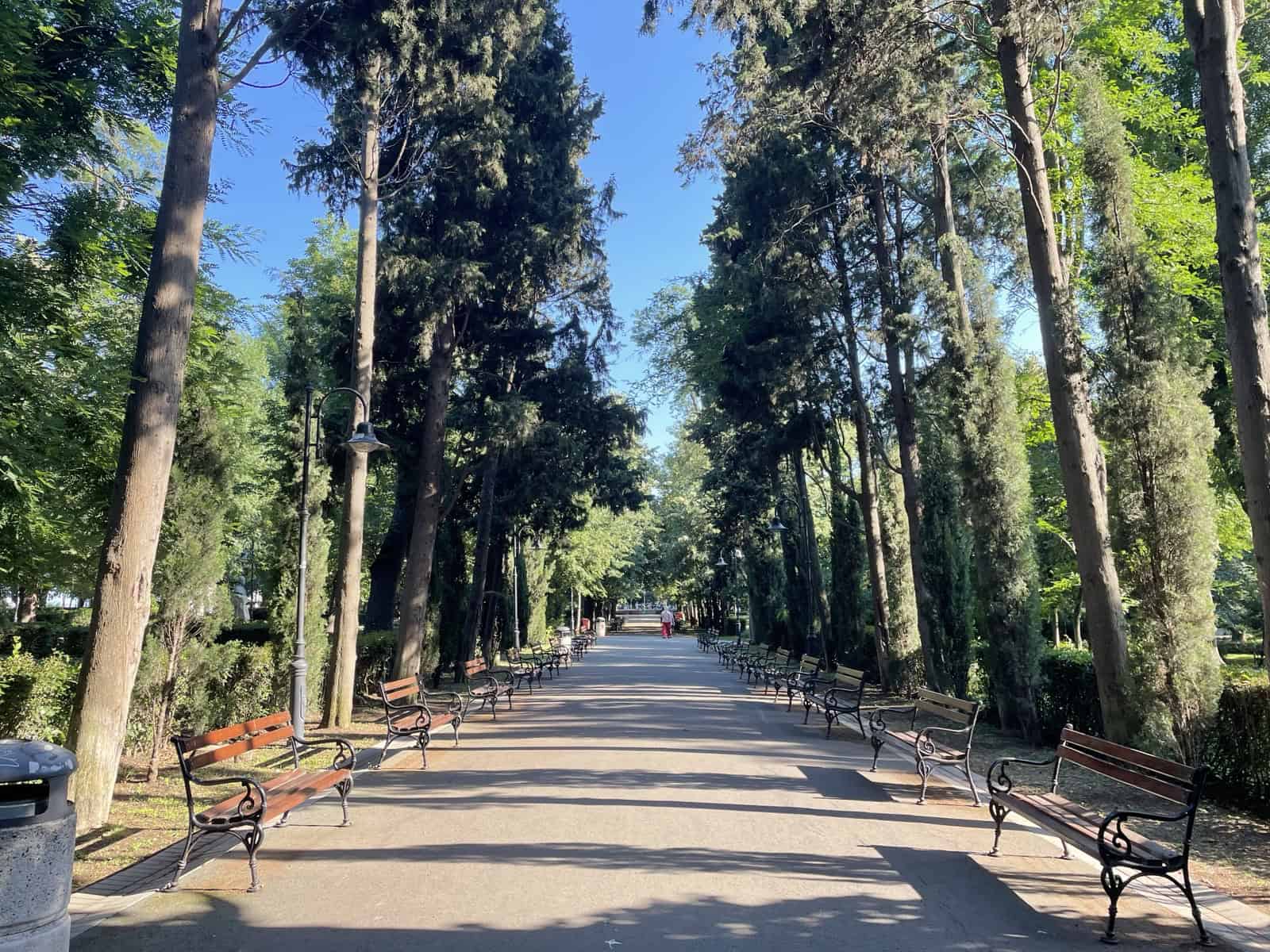
The Sea Garden is the place to go in Burgas. It’s a beautiful five-kilometre park running along the beach, with charming fountains, colourful flower beds, plenty of playgrounds, green spaces and benches in the shade. The steep shore also opens up a wide view over the entire coast and Burgas Bay.
There’s an open-air theatre inside the park, and a lot happens there in the summer: the International Folklore Festival, the Burgas Summer Jazz Festival and the National Pop Song Contest, as well as opera, theatre performances and rock concerts.
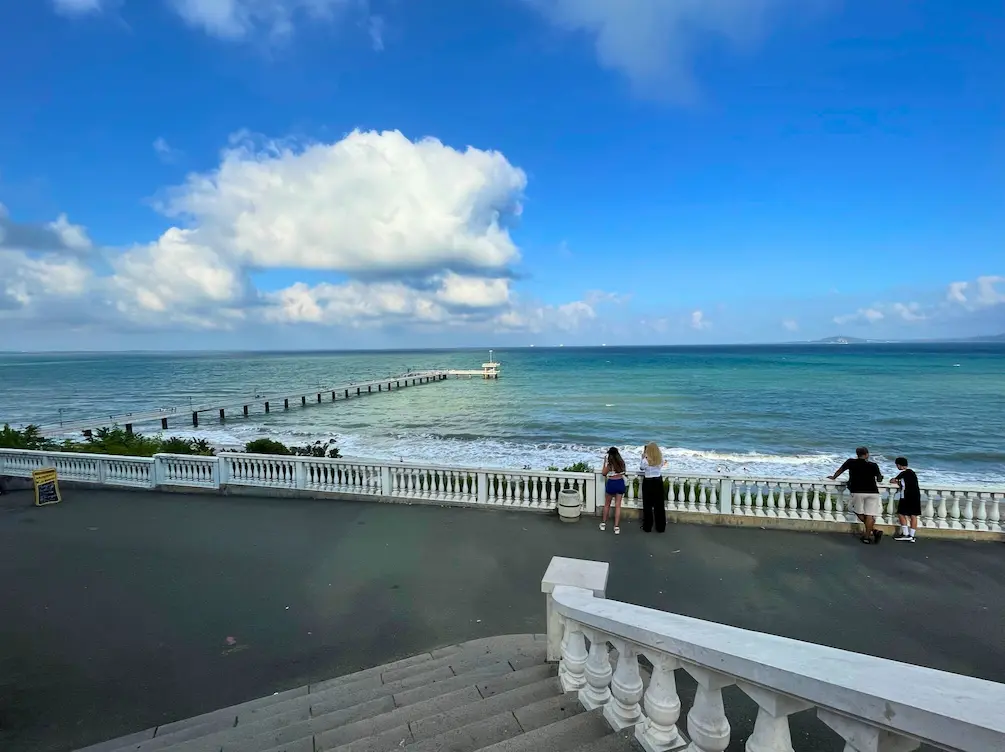
The other landmark here is the famous Burgas Bridge, a walking pier stretching out into the sea. I highly recommend a stroll along it for the view back over the Sea Garden, the beach and the docks. It’s a lovely walk out into the water, with the waves and the seagulls, and sometimes street musicians playing accordion halfway down.

St. Anastasia Island
This is an island with centuries of history behind it, steeped in legends and stories, and it’s one of the most romantic places on the Bulgarian coast.
It’s named after the monastery that once stood here. For a brief period it was a prison for exiled political prisoners, and during Ottoman rule over Bulgaria it served as a strategic military base guarding against Russian troops.
Today you’ll find a little church currently being restored and a café serving a fish soup made with five different types of fish. For the more adventurous, you can even spend a night on the island in one of the renovated former monastery buildings. And the view over Burgas Bay is second to none.
There are regular boat services from the harbour. You can also book a guided tour in English, but you need to let them know in advance.
Booking ahead is essential, especially in high season, and it’s cheaper to book direct — around €9.50 for a return ticket. There’s no online booking system, so it’s phone or email only, but a short email a few days ahead is all it takes: [email protected], or call +359 882 004 124.
Explore the city centre
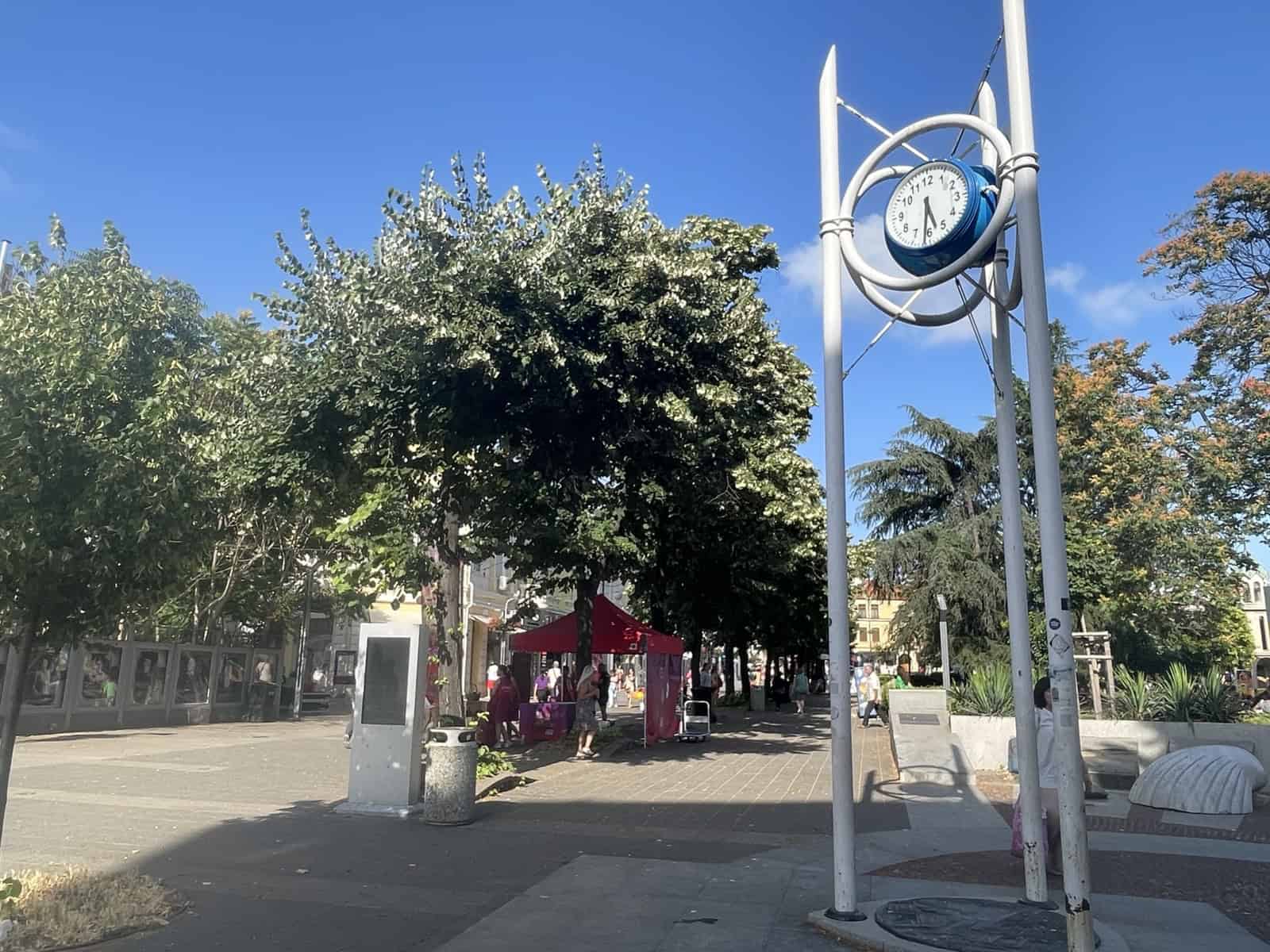
A walk through the centre is a great way to spend a few hours in Burgas. The two main streets, Alexandrovska and Aleko Bogoridi, intersect at the town hall and together form the longest pedestrian zone in Bulgaria. Next to that intersection you will also find a little Armenian church that dates back to the 17th century. It’s a nice little stop if you’re interested.
Along and around the pedestrian zone you’ll find shops, cafés, restaurants and bars, plus most of the city’s attractions: the Archaeological Museum, the Ethnographic Museum and the History Museum. They’re all fairly small, but worth a go if you’re a culture vulture and like digging into local history and traditions.
Another staple of Burgas is Helikon, a bookstore that’s been around for 30 years or so. It has a huge selection of books, board games and puzzles, with quite a few titles in English. You’ll find it on Troikata, the most famous square in Burgas, across from the courts of justice. While you’re there, Mezetto nearby is a very good pub for local craft beers or a quick lunch.
Add the Burgas Clock to your list, too. Every local knows it, and it’s a common and much-loved meeting point.
Saints Cyril and Methodius Orthodox Cathedral is the biggest church in the city, and worth stepping into if you’re interested in Orthodox temples. It’s right by the main pedestrian street, so you can pop in and carry on with your walk.
Go to the beach

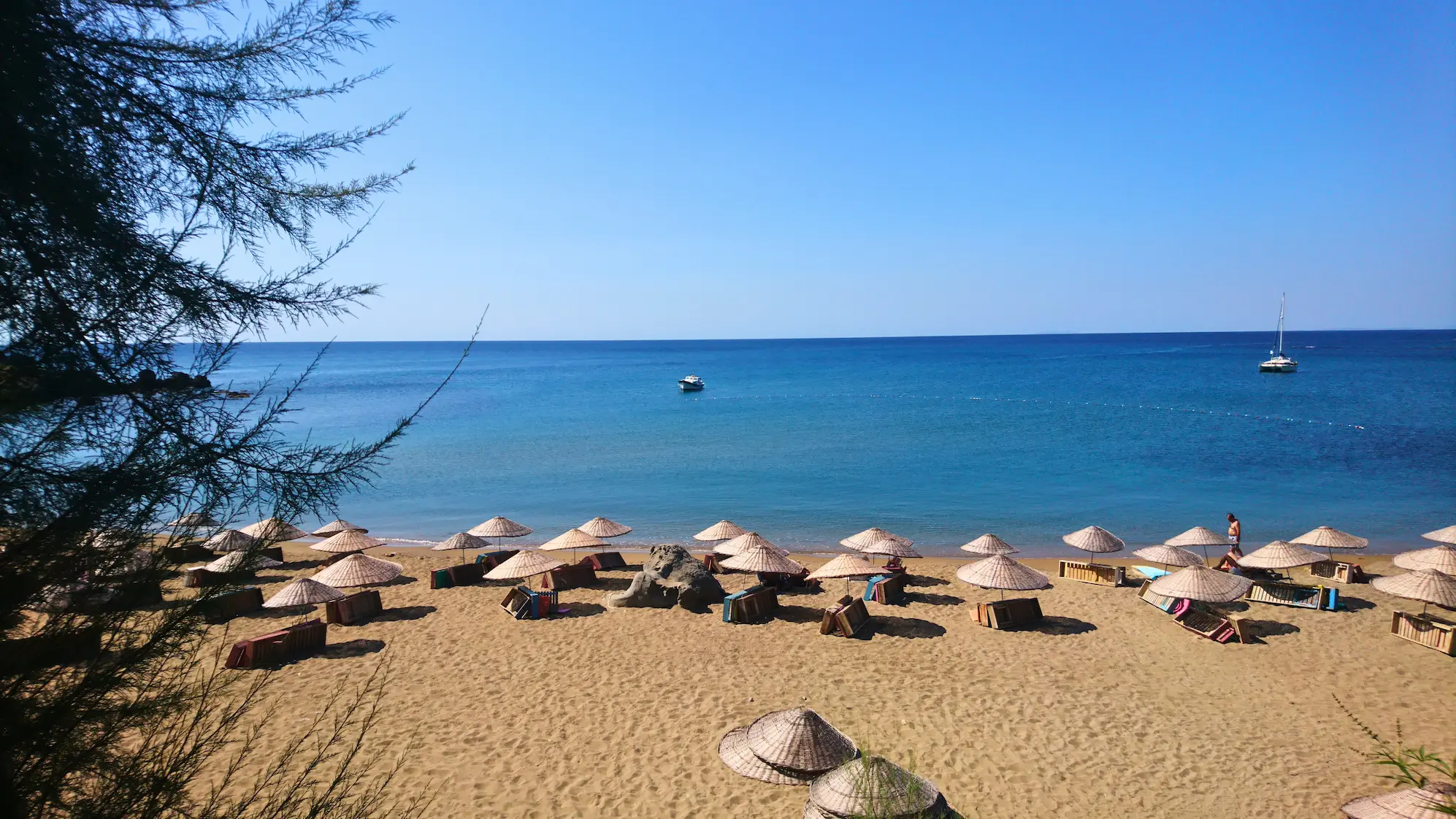
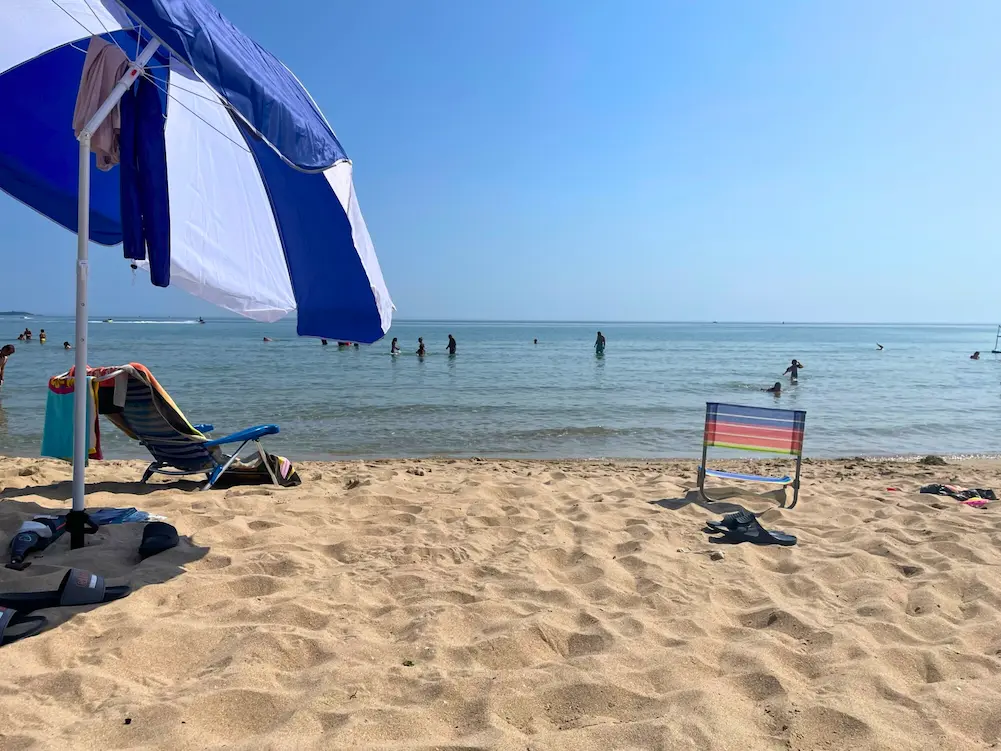
The city beach is very easy to reach from the centre. It stretches for about four kilometres and gets busy during high season.
Being a city beach, it has its downsides: the water isn’t crystal clear, and there’s a steady stream of pedestrians walking past. Even so, it’s a great spot to cool off with a dip in the Black Sea, or just to relax with a beer or a cocktail in hand.
There are paid areas on the beach, where you pay for sunbeds, but there are still large parts that have remained free. You can expect prices roughly between 5-15 EUR depending on location and offer.
And if you don’t mind driving half an hour or more for something better, there are plenty of beautiful beaches up and down the coast. More on those at the end of this post.
Where to eat and drink?
On the beach and along the beach alley you’ll find countless bars and little restaurants, called kapani. Some take a more modern approach to their dishes, others serve traditional food at very affordable prices. Both are good in my opinion, depending on the kind of experience you’re after.
My favourite is right at the end of the alley: Kapana. It looks a bit shabby, but the food is great, and it’s where a lot of locals go. Another good option for traditional cuisine is The Mill, which has a lovely summer garden and is a stone’s throw from the beach.
Whichever you pick, have some fish. A lot of it is freshly caught, so just ask the waiters what they’d recommend. The absolute Burgas classic is fried sprats with fries. But it might also be grilled sea bream, sea bass or mussels. The local beer to try is Burgasko, a light lager.
After dark you can head to Aleko Bogoridi and enjoy a drink in one of the countless little bars or cafés.
Looking for something completely different?
Just north of the city is Atanasovsko Lake, a salt lake where locals have been coming for the mud and brine baths for generations. The water turns pink in high summer, the salt pans stretch out flat and white, and you’ll find people happily covered head to toe in black mud.
The mud and the salt water have long been used here for skin conditions and breathing problems, and plenty of locals swear by it. Bring water, sunglasses, and flip-flops you don’t mind ruining.
Getting there: You can walk from the end of the beach alley in the Sea Garden — around 25–30 minutes. I always cycle it myself, which takes about ten minutes and is a much nicer way to do it in the heat. Burgas has municipal bike rental stations dotted around the city, and there are detailed instructions at each one, so it’s fairly straightforward to sort out on the spot.
There are toilets and showers at the lake, though you’ll have to pay for them — or you can just wash the mud off in the sea. The mud is good all summer, but I’d go early or in the late afternoon, as it gets seriously hot around midday.
Where to stay in Burgas?
You’ve got two main areas to choose from: the city centre or closer to the Sea Garden. I wouldn’t recommend either Izgrev or Slaveykov neighbourhoods, as both are far away from the beach and city center.
Sea Garden
You’re a short walk from the beach, and having the park on your doorstep means somewhere to cool down when it gets too hot. The downside is mosquitoes in the evenings, and you’re a bit further from the fancier restaurants and cafés — though if you’re planning to eat along the beach alley anyway, that’s no problem at all.
City center
You’re close to the action here, livelier at night, with all the shops on your doorstep. The trade-off is the heat: there’s less shade during the day, and it’s a longer walk to the beach and the Sea Garden.
⭐ Our tip: Look for something in Lazur, which is where we actually live. It’s about a 10 minute walk to the beach and the Sea Garden, and 15–20 minutes into the centre — so you get the best of both worlds. Here’s a place we’d point you to in Lazur.
We will have a full guide with pros and cons on specific properties soon here.
Best day trips from Burgas
Burgas is worth visiting in its own right, but it also makes a great base for trips along the coast. Many coastal towns and beautiful beaches are less than an hour away.
If you’re travelling without a car, head to Bus Station South. This is where the buses and minibuses for the coast depart from, and you can check schedules and destinations on the Burgas Bus website. Here are my highlights.
Nesebar
Nesebar is an ancient Roman city 35 km north of Burgas. It has an old town beautifully situated on a narrow island, now connected to the mainland by a man-made isthmus, a new town full of residential houses and hotels, and a few lovely sand beaches.
For such a small city, the history runs deep. Nesebar was one of the most important strongholds of the Eastern Roman Empire from the 5th century AD, and you can still see the very well-kept fortifications at the entrance to the old town. Thanks to its wealth of historic buildings, it’s on the UNESCO World Heritage list.
It’s also sometimes said to be the town with the highest number of churches per capita, with 40 in total, ranging from medieval ones to basilicas and Eastern Orthodox churches.
Nessebar also works well as an overnight stop if you’d rather have the old town to yourself. Most day-trippers clear out by early evening, and the streets in the last hour of light are a different place entirely.
If you’d rather stay the night, look in the old town itself — being inside the peninsula rather than out in the newer part is what makes the evening. Here’s where we’d look for a room first – it sits right on the main square and it’s the kind of place I’d book if we were staying over. We live 20 minutes down the road, so we’ve never stayed here ourselves. But if we were, the old town is where we’d look.
Sozopol
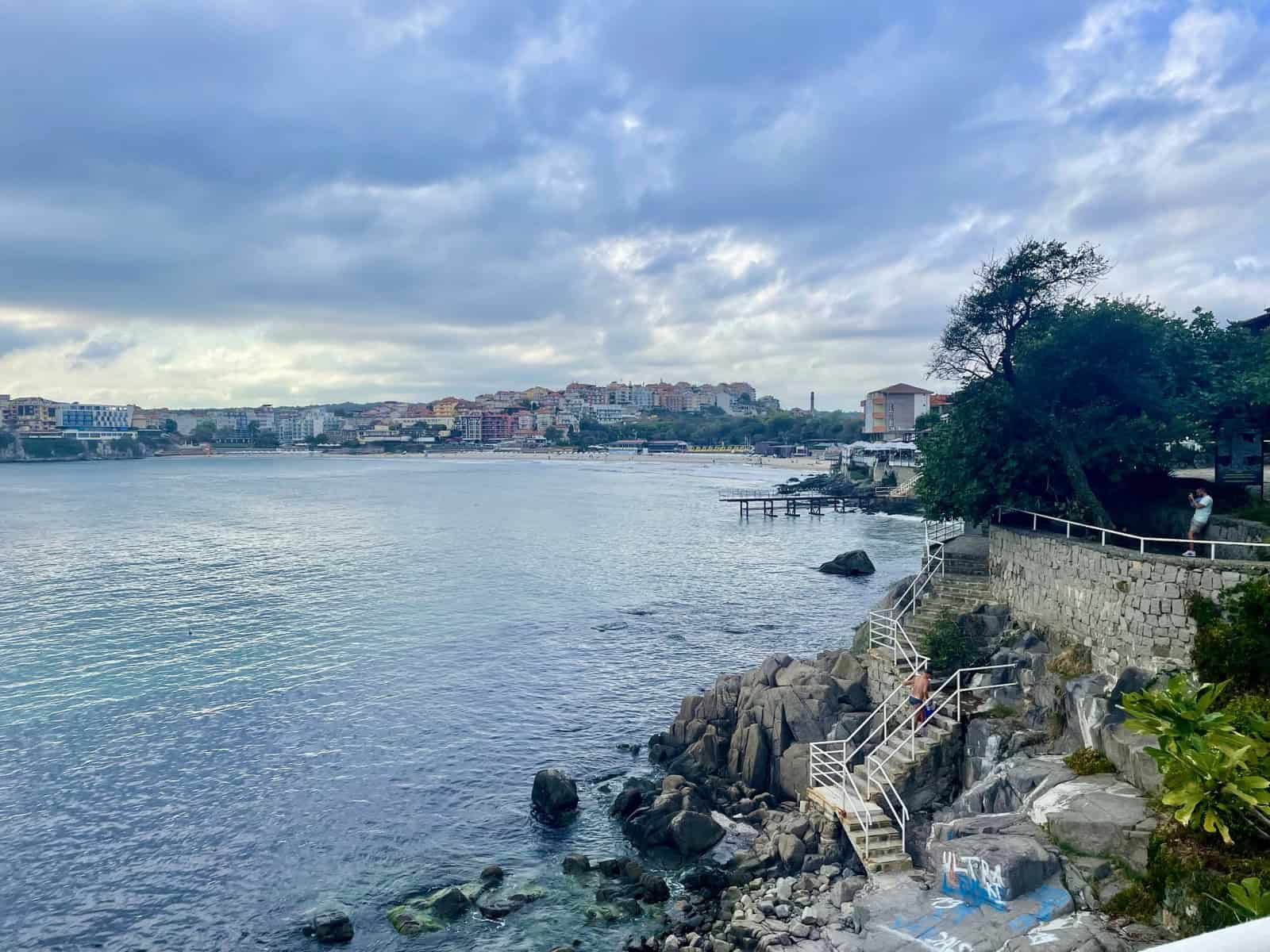
Sozopol is another ancient seaside town, 35 km south of Burgas, with an old town sitting on a little peninsula. Walking around it gives you a stunning view over the bay and the beach. It’s one of the oldest towns on the Bulgarian coast, with the first settlement dating back to the Bronze Age.
I love spending a day here: wandering the cobblestone streets, looking at the old houses, sitting in a restaurant on the cliffs overlooking the bay, or just going for a swim at one of the beaches.
And after the cruise, find a restaurant on the cliffs, order something, and watch the light go over the bay. If that sounds like the sort of evening you’d rather not cut short, this is where we’d look for a room. We live 20 minutes up the road so we’ve never stayed over ourselves, but this is where we’d check — a stone’s throw from the cliffs, free on-site parking, and run by a mother and son.
Beaches
There are many beautiful sand beaches on the Bulgarian coast, but the ones very close to Burgas, under 30 minutes’ drive, are limited.
To the north, my top pick is South Beach in Pomorie, around 18 km from Burgas. To the south, the nearest good option is the long Camping Gradina beach, about 30 minutes by car and well worth the drive.
If you’re willing to go a bit further, I highly recommend Arkutino beach, Perla beach in Primorsko and Veleka beach.
Renting a car? Most of these are doable by bus, but a car opens up the smaller beaches and lets you string a few places together in a day. Here’s where we always compare prices before booking.
For a more detailed guide to the best beaches and resorts on Bulgaria’s coast, check out our detailed article.
Final words
Burgas won’t give you an all-inclusive resort, and that’s rather the point. It’s a city that’s genuinely lived in, with a park most capitals would envy, a beach you can walk to from the centre, and half the south coast within an hour. Come for a few days, or make it your base for the whole trip — either works.
FAQ
Burgas or Varna?
Both cities have their charm, and they’re similar in how they work as a base – there’s plenty worth visiting from either. Burgas is smaller and easily walkable, whereas in Varna you’ll need a car or public transport to get around. Burgas is also arguably easier to reach in summer, thanks to the higher number of charter flights. It has a wider stretch of beach and a calmer sea, and it’s closer to Nessebar and Sozopol, as well as the other good beaches on the south coast. Varna, on the other hand, has the better restaurants and cafés and the area and resort around Varna are generally less crowded.
Is Burgas worth visiting?
Absolutely. Even a couple of days is enough to see the highlights, especially in summer.
How many days do you need in Burgas?
Three to four days is enough to see everything and get a feel for the city without rushing. If you’d rather take things slowly, stay longer. And if you’re using Burgas as a base for a longer holiday, you can easily fill a week or more with day trips to Nessebar, Sozopol and the other towns and beaches along the coast.
What’s the best month to visit Burgas?
July is probably the sweet spot — reliably good weather and a sea that’s properly warmed up. Mid-June onwards works too, though you might get cooler days. August is fine as well, just be aware that after the 15th there’s often a stretch of a few days of bad weather.
Our tip: if you want the city without the crowds, come in September. Most of the summer holidaymakers have gone, the weather usually holds until mid-month, and the sea is at its warmest after a whole summer of sun.
Is Burgas good for children?
Very much so — we have a great time here with our toddler. There are playgrounds almost everywhere, and because the city is compact you’re never walking far. The Sea Garden is a dream for parents: long green stretches of shade, no cars, and room for little ones to explore freely.
One thing to be aware of is the pavements. There have been huge improvements in recent years, and the city is generally stroller-friendly, as is the public transport, but there are still some streets where it’s a bit of a struggle.